Volcano Alert Levels Explained: Normal, Advisory, Watch, Warning
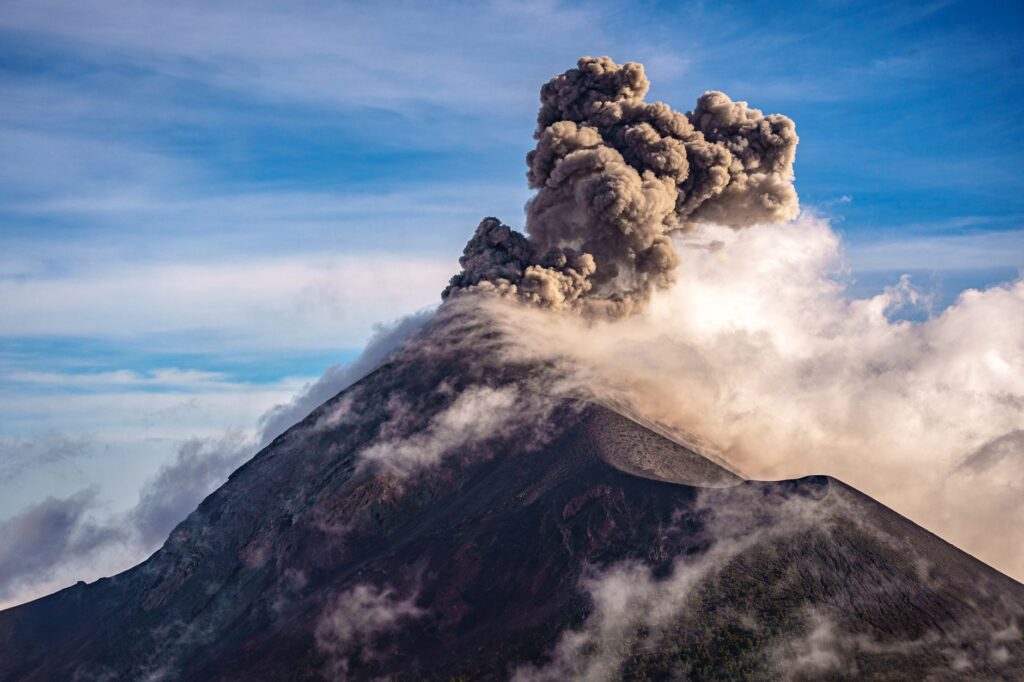
The U.S. Geological Survey (USGS) rates each monitored US volcano with two labels. The Volcano Alert Level (Normal, Advisory, Watch, Warning) describes hazards on the ground, and the Aviation Color Code (Green, Yellow, Orange, Red) describes the threat of volcanic ash to aircraft. Both are set by the USGS volcano observatory responsible for the volcano, and they usually move together.
As of November 9, 2026, the USGS list of elevated volcanoes showed three US volcanoes above Normal: Great Sitkin in Alaska at WATCH/ORANGE, Kīlauea in Hawaii at ADVISORY/YELLOW and Ahyi Seamount in the Northern Mariana Islands at ADVISORY/YELLOW. Our live list of US volcanoes with elevated alert levels shows the current USGS data in one place.
What do Normal, Advisory, Watch and Warning mean?
The four alert levels are written for residents, emergency managers and land agencies. USGS defines each level in a sentence or two. Two of the levels have a second meaning that applies when a volcano is calming down after a higher level.
| Alert level | Color code | USGS definition (short form) |
|---|---|---|
| NORMAL | GREEN | The volcano is in a typical background, noneruptive state. After a higher level, it means activity has ceased and the volcano has returned to background. |
| ADVISORY | YELLOW | The volcano shows signs of elevated unrest above its known background level. After a higher level, it means activity has decreased significantly but is still closely monitored for a possible renewed increase. |
| WATCH | ORANGE | Heightened or escalating unrest with increased potential of eruption, timeframe uncertain, or an eruption is underway but poses limited hazards. For aviation, Orange also covers an eruption with no or minor ash emissions. |
| WARNING | RED | A hazardous eruption is imminent, underway or suspected. For aviation, Red means significant emission of volcanic ash into the atmosphere is likely or underway. |
The wording follows the USGS explanation of Volcano Alert Levels and Aviation Color Codes. When a Red or Orange notice can estimate it, the observatory also gives the height of the ash plume.
Why does each volcano have two labels?
Ground hazards and aviation hazards are different. Lava flows, volcanic gas and ground cracks threaten people near a volcano. An ash cloud can threaten aircraft far downwind. USGS says Green and Yellow carry the same meaning as Normal and Advisory, while Orange and Red focus on whether volcanic ash threatens aviation.
The two labels are paired by default. USGS notes that they may occasionally be decoupled when the hazards on the ground and in the air are very different, for example when a volcano needs a Watch on the ground but sends up little ash.
The color code is the older of the two. According to USGS, the Alaska Volcano Observatory first used color codes during the 1989–90 eruption of Redoubt Volcano, and the International Civil Aviation Organization adopted the scheme in the early 2000s. In 2006 the USGS volcano observatories adopted one national system. The words Normal, Advisory, Watch and Warning were chosen to mirror the terms the National Weather Service used at the time for severe storms and floods. Our guide to watch vs warning vs advisory explains how the NWS uses those words today.
Who sets volcano alert levels?
The USGS observatory responsible for each volcano sets its level and color code. USGS runs five volcano observatories:
- Alaska Volcano Observatory (AVO): volcanoes in Alaska. AVO also coordinates monitoring of volcanoes in the Commonwealth of the Northern Mariana Islands. Our page of recent earthquakes in Alaska lists USGS data for the state.
- Cascades Volcano Observatory (CVO): Washington, Oregon and Idaho, including Mount Rainier, Mount St. Helens and Mount Hood.
- California Volcano Observatory (CalVO): California and Nevada, including Mount Shasta, Lassen Volcanic Center and the Long Valley Volcanic Region.
- Hawaiian Volcano Observatory (HVO): volcanoes and earthquakes in Hawaiʻi and American Samoa.
- Yellowstone Volcano Observatory (YVO): the Yellowstone region, run as a consortium of USGS, Yellowstone National Park, universities and state geological surveys. See how Yellowstone is monitored.
There is no fixed formula. HVO has written that it does not use set thresholds because each situation is different, and that its scientists usually discuss a change at length before making it.
The 2018 USGS national volcanic threat assessment counts 161 potentially active volcanoes in the United States, 18 of them ranked very high threat. Some remote volcanoes have too few ground instruments to confirm background activity. USGS marks those UNASSIGNED. If satellites, distant seismic stations or eyewitnesses detect unrest, the observatory assigns a level and color code, and when activity drops the volcano returns to UNASSIGNED without passing through Normal/Green.
How do alert levels change during an eruption?
Kīlauea in 2026 shows the system at work. In April 2026, HVO changed how it applies the levels to Kīlauea’s episodic summit eruption: during pauses between lava fountaining episodes the volcano sits at ADVISORY/YELLOW, and HVO raises it to WATCH/ORANGE when a new episode starts. HVO said it would move to WARNING/RED only if hazardous fallout and significant ash emissions occur.
On November 2, 2026, lava began overflowing the north vent in Halemaʻumaʻu crater, and HVO raised Kīlauea from ADVISORY/YELLOW to WATCH/ORANGE. Episode 56 of lava fountaining ran from 12:10 to 6:01 p.m. HST on November 5. On November 6, HVO lowered the volcano back to ADVISORY/YELLOW.
Each change came with two notices. A Volcano Activity Notice (VAN) goes to the public and emergency managers. A Volcano Observatory Notice for Aviation (VONA) goes to pilots and air traffic services. The Kīlauea eruption guide covers the episodes in detail.
What should you do when a volcano’s level rises?
An alert level describes the volcano. It is not an evacuation order. Protective instructions come from local emergency managers, such as a county civil defense or emergency management agency, and from land managers such as the National Park Service. HVO, for example, says it stays in contact with Hawaiʻi Volcanoes National Park and the Hawaiʻi County Civil Defense Agency about eruptive hazards. Follow their instructions, and check the National Weather Service, which issued a special weather statement during Kīlauea’s November 5 episode.
How can you get volcano alerts?
- Open the USGS page for the volcano you care about. Each update starts with the current alert level and color code.
- Subscribe to the free USGS Volcano Notification Service, which emails VANs, VONAs and routine updates for the volcanoes and observatories you choose.
- Check the date and time on each notice. Daily, weekly and monthly updates repeat the current level even when nothing has changed.
- For local actions, follow your county emergency management agency and the National Weather Service.
Bottom line
The Volcano Alert Level tells people on the ground how active a US volcano is, and the Aviation Color Code tells pilots how likely volcanic ash is. The responsible USGS observatory sets both, usually as a pair. Local officials, not the alert level, decide on evacuations and closures.
FAQ
Does ADVISORY mean a volcano is about to erupt?
No. USGS uses Advisory for unrest above background, or for a volcano whose activity has dropped after a higher level. The level describes current conditions and is not an eruption forecast.
Can the alert level and color code be different?
Yes, though it is uncommon. USGS pairs them by default and decouples them only when the hazards on the ground and in the air are very different.
What does UNASSIGNED mean?
It means the volcano lacks enough ground-based instruments for USGS to confirm it is at background levels. If unrest is detected by satellites, distant seismic stations or eyewitnesses, the observatory assigns a level and color code.
How many US volcanoes are elevated right now?
As of November 9, 2026, USGS listed three: Great Sitkin (WATCH/ORANGE), Kīlauea (ADVISORY/YELLOW) and Ahyi Seamount (ADVISORY/YELLOW). The list changes, so check the USGS volcano updates for the current count.