Kilauea Episode 26 Fountains Top 1,000 Feet, Then Pause
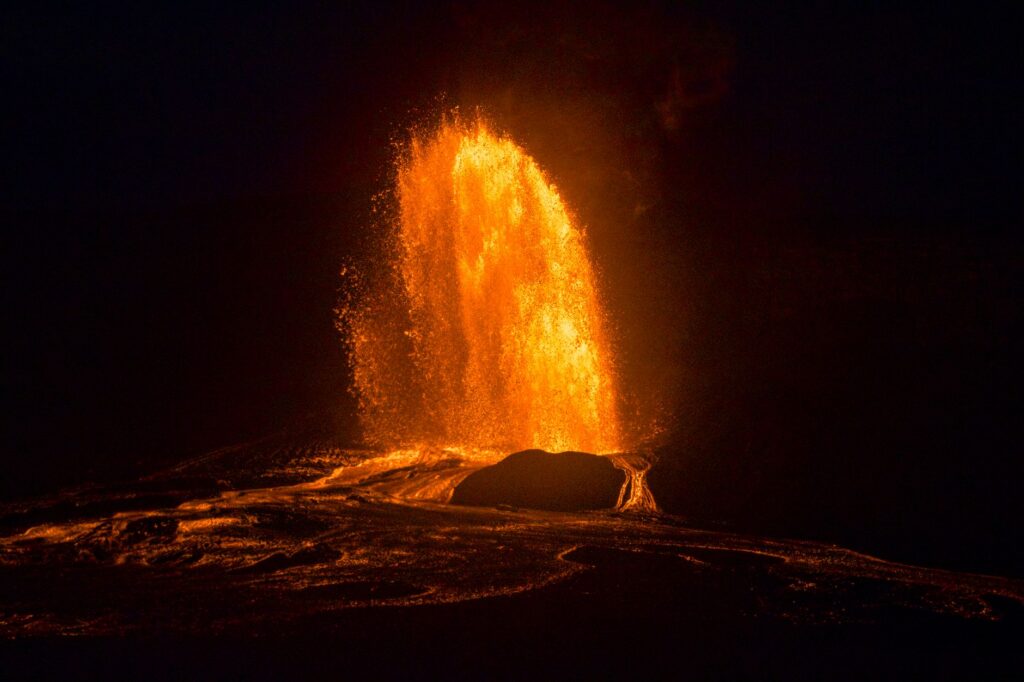
Kilauea volcano on Hawaii’s Big Island began episode 26 of its ongoing eruption with sustained lava fountaining at 1:40 a.m. HST Friday and paused at 10:25 a.m. HST the same day, the U.S. Geological Survey’s Hawaiian Volcano Observatory reported, according to Spectrum News. The report was updated June 20, 2025. Lava fountains during the episode rose over 1,000 feet.
The observatory warned visitors to Hawaii Volcanoes National Park and residents of nearby areas to watch for Pele’s hair and other small fragments of volcanic glass and tephra carried in the plume.
How episode 26 unfolded
Low-level precursory activity started in Halemaʻumaʻu crater at 11:26 p.m. Thursday, when lava began overflowing from the north vent. That activity increased until sustained fountaining began at 1:40 a.m. Friday, with lava fountains and flows erupting from the north vent.
The north vent stopped erupting at 10:07 a.m. The south vent stopped at 10:25 a.m., which the observatory counted as the end of the episode.
Where the eruption stands
The eruption began on Dec. 23, 2024. Including episode 26, it has produced 26 episodes of lava fountaining, each separated by brief pauses. The fountains come from two vents inside Halemaʻumaʻu crater, called the north vent and the south vent. For background on how episodes and alert levels work, see this explainer on Kīlauea’s eruption, alert levels and vog.
Why it matters: ash, glass and gas downwind
The National Weather Service reported winds blowing from the north, which carried volcanic gas emissions and tephra from the lava fountain to the south of Halemaʻumaʻu. Tephra is the general term for rock and glass fragments thrown out by an eruption. Pele’s hair is thin strands of volcanic glass.
The Hawaiian Volcano Observatory also said emissions of volcanic gas may be elevated. It described the gas as a mix of water vapor, carbon dioxide and sulfur dioxide. People in and near the park should follow instructions from Hawaii County and National Park Service officials and check the National Weather Service for local conditions.
What the pause means
The observatory has described the gaps between episodes as brief pauses in activity. The report did not give a time for any further activity, and it is the observatory’s updates that carry the official status of the eruption.
Source: Spectrum News