Kīlauea Has Repaved Nearly 90% of Its Surface in 1,500 Years, HVO Says
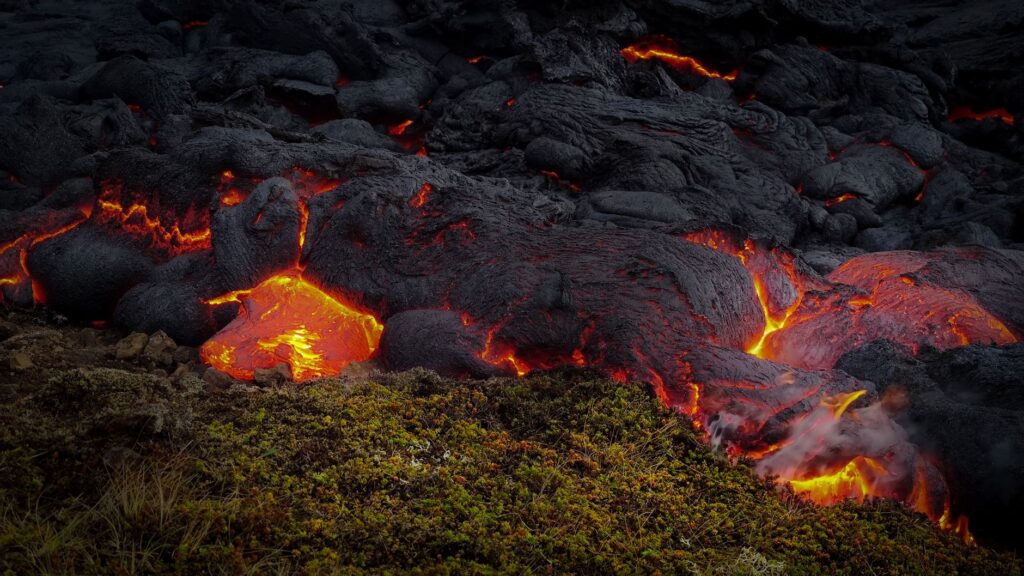
Kīlauea’s own eruptions are hiding its history. Hawaiian Volcano Observatory (HVO) geologist Drew Downs wrote in the observatory’s weekly “Volcano Watch” column that a 2021 map of the Island of Hawaiʻi shows nearly 90% of Kīlauea’s surface was repaved by eruptive activity during the past 1,500 years.
The volcano is still erupting. HVO says it recently had its 56th lava fountaining episode since December 2024, and the forecast window for Episode 57 is Nov. 21-24.
How new lava erases the record
Volcanoes along continental margins, such as the west coasts of North and South America, often grow slowly, Downs wrote. Studies of their past eruptions commonly turn up lava flows, pyroclastic flows and ash deposits hundreds of thousands of years old. Kīlauea and Mauna Loa erupt so often that fresh lava keeps covering their surfaces.
The Puʻuʻōʻō eruption in the middle East Rift Zone covered 55.6 square miles over 35 years, from 1983 to 2018. Maunaulu covered large parts of the same rift zone to the coast from 1969 to 1974. Summit eruptions from December 2020 through September 2023 filled the inner caldera with lava flows hundreds of yards thick, which hid many structures left by the 2018 caldera collapse. Several yards of tephra (fragments thrown out by lava fountains) from the current activity have also blanketed large areas of the upper Southwest Rift Zone.
Where scientists look for older clues
Drilling is one route. University of Hawaiʻi at Mānoa researchers and collaborators analyzed rocks from a 1.1-mile-deep drill core in the East Rift Zone. Their ages indicate Kīlauea was in a vigorous shield-building stage at least 200,000 years ago. A 0.7-mile core, usually called the Keller Well, was drilled at the summit in 1979 to study the caldera structure and the hydrothermal system above the magma reservoir. Each core samples a single point, so neither shows how far eruption products traveled downhill.
The other route is kīpuka, patches of older land that lava flowed around. Forest and rock beneath them survive, and they show up as green islands in a black lava field. Studying kīpuka in the Puʻuʻōʻō flow field can reveal activity that later lava covered elsewhere. Downs wrote that the deep past of Kīlauea, and even some eruptions a few hundred years old, may never be understood in detail.
Why it matters
The column explains why Kīlauea’s earlier eruptions are hard to reconstruct, and why the eruption record that exists comes from a few drill cores and preserved patches rather than continuous deposits. It also frames the current activity as the newest layer on a volcano that keeps rewriting its own surface.
Current Kīlauea status
HVO lists the Kīlauea volcano alert level as Advisory. The episodic summit eruption in Halemaʻumaʻu Crater began Dec. 23, 2024. Episode 56 lasted about 6 hours on Nov. 5, after which the summit switched from deflation to inflation. During pauses between episodes, summit sulfur dioxide emissions are in the range of several thousand tonnes per day. HVO noted no unusual activity along the East Rift Zone or Southwest Rift Zone.
Mauna Loa is not erupting and is at alert level Normal. HVO said no earthquakes were reported felt in the Hawaiian Islands during the past week. The observatory continues to monitor both volcanoes.
For what the alert levels mean, see this explainer on volcano alert levels.
Source: Big Island Now