Ethiopia’s Fentale Volcano Released 38 Kilotonnes of Methane
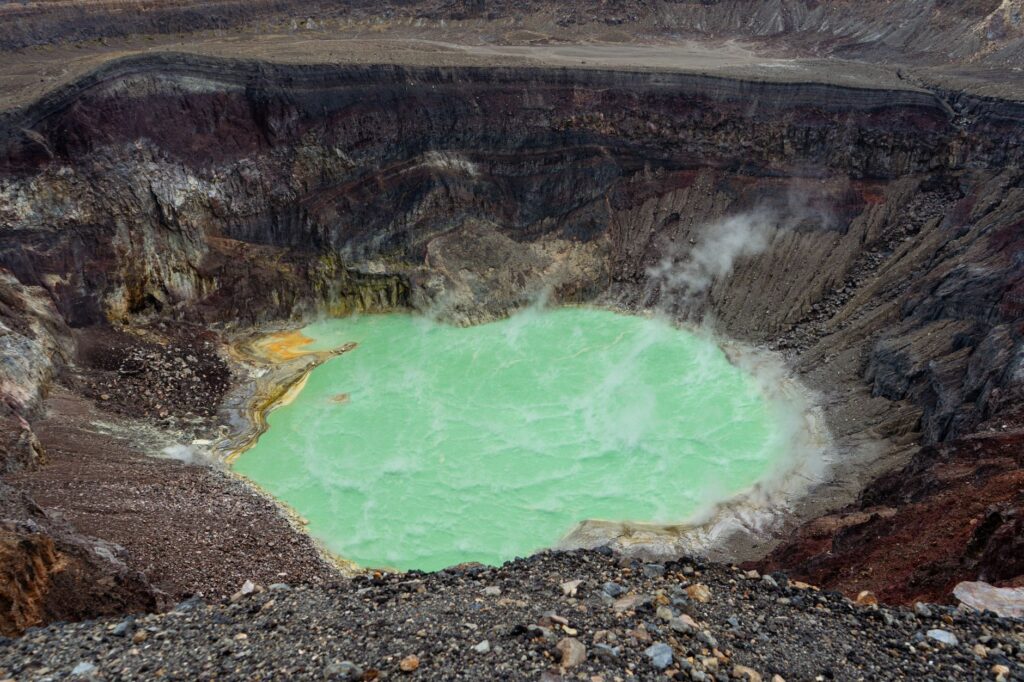
Satellite observations of Fentale Volcano in Ethiopia show it released at least 38 kilotonnes of methane over about three months, from December 2024 to March 2025, according to the University of Bristol. The researchers describe it as the first confirmed methane outburst of this size from a volcano. The study was published in Nature Geoscience on Thursday, Nov. 19.
The university likened the flow to a big industrial gas blowout. It was around four orders of magnitude above what other volcanoes give off. Fentale also gave off at least 2.9 megatonnes of carbon dioxide in the same period, without an eruption.
How the methane escaped
The team suggests that a mega-dyke intrusion drove the outburst. A dyke is a sheet of magma that forces its way through fractures in the Earth’s crust. According to the paper’s summary, this one broke through a sealed rock layer that had held methane in sediments rich in hydrocarbons.
Fentale sits about 100km from the capital, Addis Ababa. Researchers from Bristol were already working with Ethiopian colleagues to monitor the volcano when a period of seismic unrest began. Carbon-monitoring organizations GHGSAT and the Space Research Organisation Netherlands (SRON) then contacted them, because their satellites had picked up the methane.
The team combined thermal, optical, SAR (radar) and gas measurements to reconstruct the sequence of events and the shallow structure under the volcano. Lead author Dr. Edna Dualeh, a senior research associate in Bristol’s School of Earth Sciences, called the observation “a complete surprise.”
What this means for climate
Set against what the world emits every year, the amount is tiny, and the university says it won’t shift today’s climate in any measurable way. Its interest lies in what it shows about natural methane release. It points to a previously unknown way that gas can escape in sudden bursts, It also gives researchers a clue to how rising magma could have pushed greenhouse gases out of buried rock long ago.
The authors see Fentale as a small-scale example of Large Igneous Provinces, enormous volcanic events in Earth’s history that are thought to have released vast amounts of greenhouse gases. Dualeh said she hopes to explore links between methane release during continental rifting and periods of rapid warming in the past.
What is still unknown
Volcanoes usually emit very little methane. Earlier measurements that had not been analyzed suggest the East African Rift has higher background methane emissions than other volcanic systems. The researchers say the new observations may help identify other volcanic systems that could produce such an outburst, but further research is needed to learn how often they happen.
Dualeh said the episode revealed the potential for large, episodic greenhouse gas emissions from rift volcanoes, and neither climate models nor volcano hazard studies nor estimates of natural methane in the air include it. Readers who want background on how agencies label volcanic activity can see our explainer on volcano alert levels.
The paper is titled “Methane outburst driven by magma-sediment interactions at Fentale Volcano detected by satellite,” by E. Dualeh and colleagues.
Source: University of Bristol