Kilauea Episode 57 Fountaining Window Set for Nov. 16-21, USGS Says
Kilauea’s summit could see its next round of lava fountaining between Nov. 16 and Nov. 21, according to the USGS Hawaiian Volcano Observatory (HVO), which gave that forecast window for episode 57 in its weekly Volcano Watch update. Episode 56 sent lava fountains up in Halema’uma’u, at the summit of the Hawaii volcano, for six hours on Nov. 5, 2026.
When that fountaining ended, HVO said, the summit switched from deflationary to inflationary tilt, meaning the ground had stopped sinking and started to swell again. Kilauea has been erupting in episodes inside its summit caldera since Dec. 23, 2024, and its USGS Volcano Alert Level stands at ADVISORY.
What HVO reports at Kilauea and Mauna Loa
Sulfur dioxide emissions from the summit remain elevated, according to the observatory. HVO said it has seen no unusual activity along Kilauea’s East Rift Zone or Southwest Rift Zone. Mauna Loa is not erupting, and its alert level is NORMAL. What each level means is covered in our guide to USGS volcano alert levels.
People in the Hawaiian Islands reported feeling two earthquakes in the past week, HVO said:
- A M2.9 earthquake on Nov. 6 at 12:08 p.m., 5 km (3 mi) NE of Kalaoa, at 13 km (8 mi) depth.
- A M2.6 earthquake on Nov. 10 at 2:41 a.m., 7 km (4 mi) NNE of Puako, at 4 km (2 mi) depth.
How gas monitoring at Kilauea began in 1922
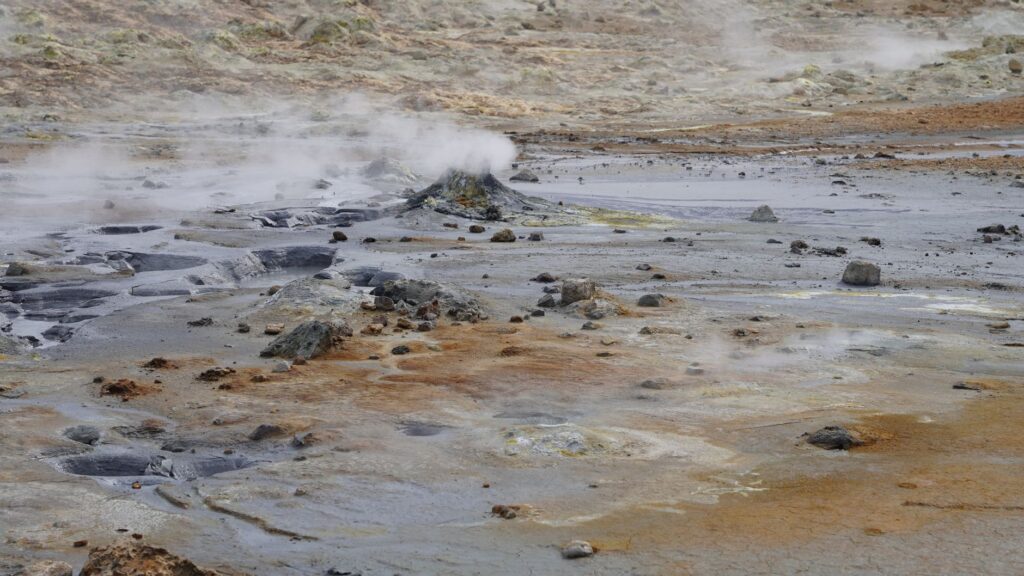
This week’s column, written by HVO gas technician Christine Sealing, goes back to the start of more than 100 years of gas chemistry research at Kilauea. The site is Ha’akulamanu, also called Sulphur Banks, in Hawaii Volcanoes National Park. A low heap of rocks and rubble near the boardwalk marks where it began.
HVO founder Dr. Thomas Jaggar had studied Kilauea for 10 years and wanted a way to tell when an eruption was getting close. Rising magma heats the rock around it, so he reasoned that temperature changes underground might signal a shift in activity. In May 1922 he started drilling shallow wells, about 12 inches (30 centimeters) across, between a steaming crack and a bank of red clay and sulfur.
The work went slowly. The drill bit was turned by hand, water carried from Volcano House was poured in to lubricate it, and scalding steam came out of the hole. After repeated problems, drilling on the first well stopped at 22 feet (about 7 meters). Jaggar moved the rig 140 feet (43 meters) away, and between 1922 and 1923 three more wells went in, each about a meter from the next. The second one reached 50 feet (15 meters) before it hit a large underground crack.
Near the surface, heat and corrosive gases had softened the rock. Deeper down, Jaggar found hard basalt lava full of iron sulfide (pyrite), and he wrote dryly in his monthly bulletin that basalt was “hard rocks to drill.”
What the early readings showed
By 10 feet (3 meters) down, steam in every well had reached about 204 degrees Fahrenheit (96 degrees Celsius), the boiling point of water at the site’s elevation of 3,900 feet (1,200 meters). The temperature held there to the bottom of each well.
Dr. Eugene T. Allen of the Carnegie Institution of Washington confirmed that gas from the wells matched gas from the natural fumaroles (volcanic gas vents). His first analyses were mixed, but they pointed toward what scientists now understand: the gases at Ha’akulamanu come straight from magma beneath Kaluapele, Kilauea’s caldera.
Why it matters for monitoring today
HVO has tracked gas chemistry from the Ha’akulamanu wells since 1922. The original well heads have crumbled, but hot gas still escapes at the spot. The observatory lost its analytical laboratories in the 2018 eruption, and the column says new labs to replace them are coming soon.
Source: Hawaii Tribune-Herald