Kilauea’s 56th Eruption Sends Lava 660 Feet High, Then Stops
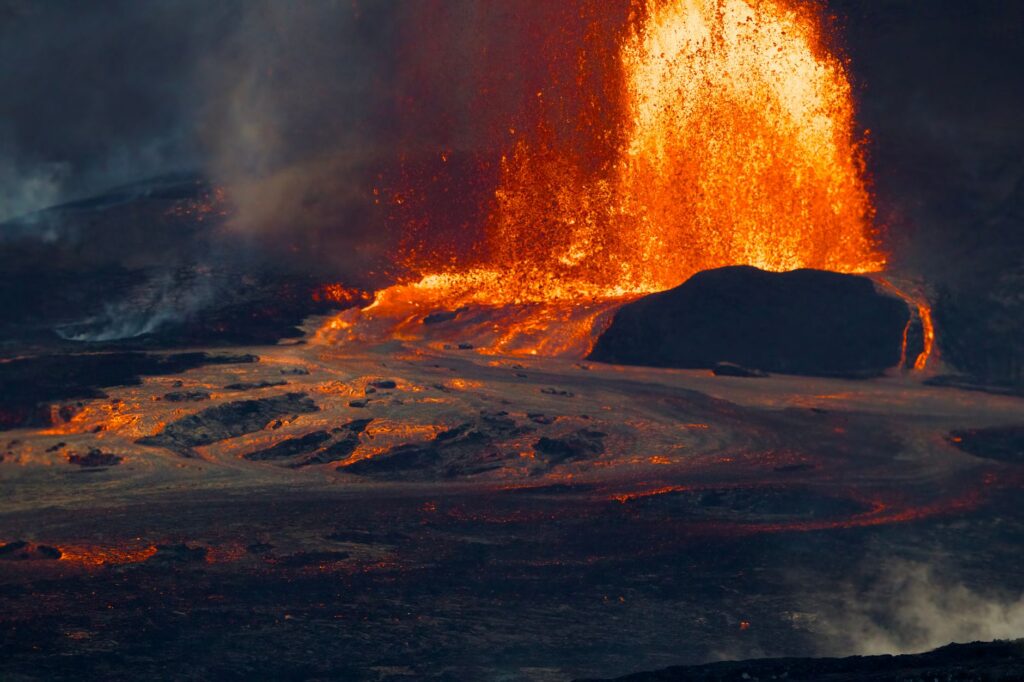
Kīlauea sent lava fountains about 660 feet above its summit crater on Thursday, Nov. 5, in the 56th episode of an eruption that began in December 2024. The display lasted nearly six hours and stopped abruptly at 6:01 p.m. local time, according to reports based on the U.S. Geological Survey (USGS) and Hawaiʻi Volcanoes National Park.
The USGS lowered Kīlauea’s alert level from Watch to Advisory on Nov. 6 after activity dropped.
How the episode unfolded
The USGS says the episode began at 12:10 p.m. on Nov. 5 in Halemaʻumaʻu crater, at the volcano’s summit. Fountains from the north vent reached their maximum height of about 660 feet in the early afternoon. Scientists estimate that around 8 million cubic yards of lava erupted.
The fountains weakened considerably by late afternoon and flickered briefly just before 6 p.m. before stopping at 6:01 p.m. Lava already on the crater floor kept moving for a while afterward. In a Facebook post, the national park shared photos of the final moments against the sunset, calling the scene “a grand finale.”
Ash plume and Pele’s hair
A plume of volcanic gas and other material rose as high as 18,000 feet above sea level. Winds carried it across the surrounding area. Volcanic fragments fell mostly in closed sections of the national park.
Some material traveled farther. Scientists documented light deposits of ash and Pele’s hair near Highway 11 and the Footprints Trailhead. Pele’s hair is made of fine strands of volcanic glass that form when molten lava stretches and cools, and the strands can be sharp.
What the alert level change means
On Nov. 6, the USGS lowered Kīlauea’s volcano alert level from Watch to Advisory and its aviation color code from Orange to Yellow. These ratings reflect the lower activity after the fountains stopped. For background on the scale, see how volcano alert levels work.
What this means for visitors and nearby communities
Volcanic gas can affect air quality, and windblown ash or glass can reach areas beyond the vents. The lava stayed inside Halemaʻumaʻu crater, which is closed to the public. Visitors have watched some episodes from designated viewpoints around the summit, and USGS Hawaiian Volcano Observatory photos show spectators at the Uēkahuna overlook during episode 56.
What scientists are watching next
Kīlauea has erupted intermittently since Dec. 23, 2024. The episodes have usually lasted several hours, sometimes followed by weeks of quiet. As of Nov. 9, the fountains had stopped, but scientists detected renewed swelling at the summit as magma collected underground. The USGS estimated that the next episode was likely more than a week away.
Source: Yahoo