Colorado Wildfires: Fire Season, Cameron Peak and the Largest Fires
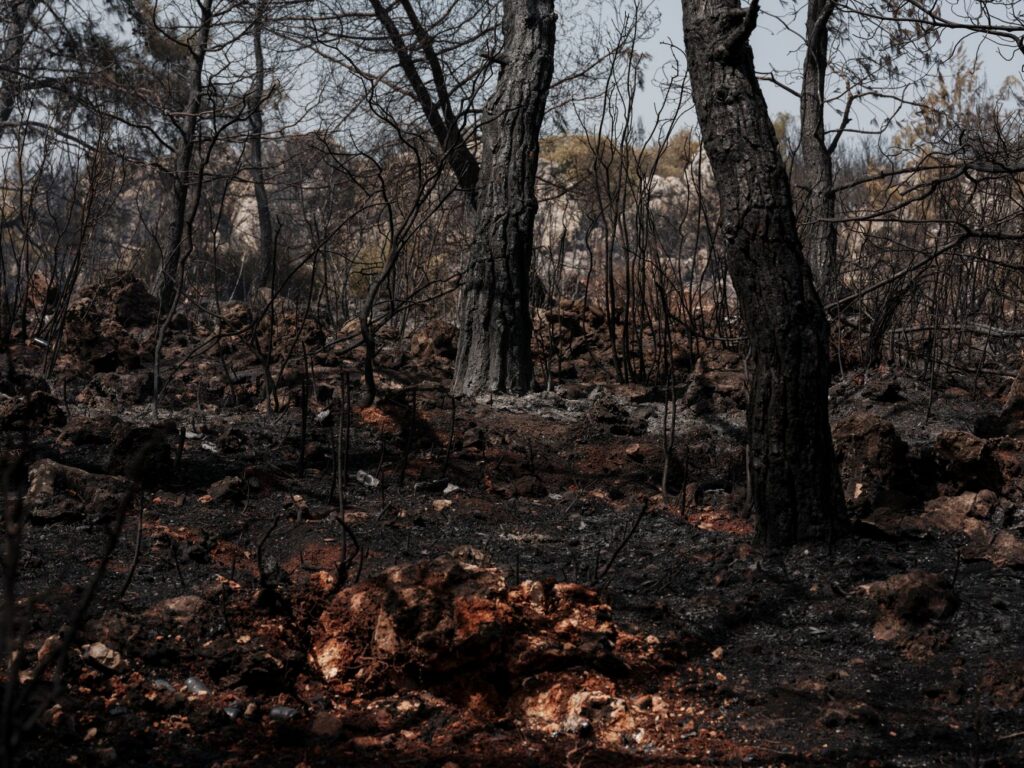
Colorado can have a wildfire in any month, but most of its fires start between May and September. The largest fire in state records is the Cameron Peak fire, which began on Aug. 13, 2020, in Larimer County and was declared 100% contained on Dec. 2, 2020. The most destructive is the Marshall fire in Boulder County, which destroyed 1,091 structures in December 2021.
The figures below come from the List of Colorado wildfires, the Cameron Peak fire article on Wikipedia and the National Interagency Fire Center. For an active fire, the official numbers are the ones published by the agency managing it.
When is wildfire season in Colorado?
Most Colorado wildfires happen from May through September, though the timing shifts from year to year with the weather. The list of Colorado wildfires notes that fire risk exists all year and that danger has been growing in winter. Drought, smaller snowpack, less snowmelt and runoff, higher temperatures and lower humidity all raise the risk, and growing vegetation gives fires fuel.
The biggest fires fit that pattern. All but one of the ten largest on the list started in June, July or August; East Troublesome started in October 2020. The Marshall fire, the most destructive, started in December 2021.
From 2011 to 2020, Colorado averaged 5,618 wildfires a year, and together they burned about 237,500 acres annually, according to the list.
What was the Cameron Peak fire?
The Cameron Peak fire started near Chambers Lake and Cameron Pass, 25 miles east of Walden and 15 miles southwest of Red Feather Lakes. Several hikers reported it on Aug. 13, 2020, at about 1:48 p.m. MST, in Roosevelt National Forest northwest of the Chambers Lake recreation area. Its cause is listed as unknown.
It burned through the Arapaho and Roosevelt National Forests in Larimer and Jackson counties and into Rocky Mountain National Park. At its peak, more than 6,000 residents were evacuated and more than 1,000 personnel were working the fire. It destroyed 469 structures, among them 220 outbuildings and 42 primary residences.
The fire killed no one directly. Six people died later in flash floods and debris flows on the burn scar: four in 2021 and two in 2022.
How did the Cameron Peak fire grow?
The fire grew in surges driven by wind, with slow stretches in between. Its main stages, as recorded in the Wikipedia article:
- Aug. 16: the fire crossed Highway 14 a second time and reached 10,867 acres, burning through beetle-killed timber near Barnes Meadow Reservoir. A DC-10 air tanker made its first retardant drops that day.
- End of August: 23,022 acres and 5% contained.
- Sept. 6 to 8: winds ahead of an early snowstorm pushed the fire east, adding 70,000 acres. Mandatory evacuations covered Red Feather Lakes, Crystal Lakes, Rist Canyon Road and part of Highway 14, and about 7,050 acres burned inside Rocky Mountain National Park.
- After the storm: 6-14 inches of snow slowed the fire only for a while, and containment rose to 15%.
- Sept. 27: gusts over 60 miles per hour drove the fire another 13,000 acres to the northeast and southeast.
- End of September: 125,006 acres with containment near 30%, and crews used 11 helicopters on spot fires.
- Oct. 14: after 62 days, it passed the Pine Gulch fire as the largest wildfire in Colorado history.
- Dec. 2: declared 100% contained, after burning over a span of 112 days.
The final size depends on the page you read. The list of Colorado wildfires gives 208,913 acres, while the article on the fire itself gives 208,663 acres.
What are the largest wildfires in Colorado history?
As of July 2026, the ten largest Colorado wildfires by area were these, per the list:
- Cameron Peak, Larimer County, August 2020: 208,913 acres
- East Troublesome, Grand and Larimer counties, October 2020: 193,812 acres. It ran more than 100,000 acres in one day, crossed the Continental Divide and led to the evacuation of all of Estes Park.
- Pine Gulch, Mesa and Garfield counties, July 2020: 139,007 acres
- Hayman, Douglas, Jefferson, Park and Teller counties, June 2002: 138,114 acres
- Lee Fire, Rio Blanco County, August 2025: 137,758 acres
- West Fork Complex, Hinsdale and Mineral counties, June 2013: 109,615 acres, including the West Fork Fire (58,570 acres) and the Papoose Fire (49,628 acres)
- Spring Creek, Costilla and Huerfano counties, June 2018: 108,045 acres
- Aspen Acres, Custer and Pueblo counties, June 2026: 101,921 acres
- High Park, Larimer County, June 2012: 87,415 acres
- Missionary Ridge, La Plata County, June 2002: 73,000 acres
Hayman held the state record for close to two decades, until Pine Gulch passed it in August 2020. Cameron Peak took the title seven weeks later. The same page puts Hayman at 137,760 acres in its introduction and 138,114 acres in its table, so sources differ on that fire as well.
Which Colorado wildfires destroyed the most buildings?
The Marshall fire ranks first, even though it burned only 6,026 acres. It destroyed 1,084 homes and 7 commercial buildings within a 24-hour period that began early on Dec. 30, 2021, and two people died. Next on the list of most destructive fires, as of July 2026:
- Aspen Acres (2026): over 850 structures, including 319 homes
- Hayman (2002): 600 structures and 6 deaths, five of them firefighters killed in an accident on the way to the fire
- East Troublesome (2020): 555 structures and 2 deaths
- Black Forest, El Paso County (2013): 489 structures on 14,280 acres, the record for homes lost until the Marshall fire
- Cameron Peak (2020): 469 structures
- Waldo Canyon, El Paso County (2012): 346 structures on 18,247 acres
Which years burned the most acres in Colorado?
National Interagency Fire Center figures for Colorado go back to 1995, and the center started keeping more accurate state acreage records in 2000. In that series, 2020 is the biggest year with 744,120 acres, followed by 2002 with 619,029 acres, 2018 with 467,424 acres and 2012 with 426,403 acres. The text of the list gives a lower total for 2020, 665,454 acres, so the 2020 figures differ by source.
Recent years have had more fires but fewer acres. Colorado recorded 8,541 fires and 36,207 acres in 2024, and the 5-year average in the table is 6,273 fires and 95,342 acres.
Who reports acres burned and containment?
For a fire that is burning, acreage and containment come from the agency or incident team in charge, such as the national forest, the county sheriff or the state. Containment is the share of the fire’s edge that crews have secured with a control line, so a fire can grow while its containment percent rises. Our explainer on what percent contained and acres burned mean covers the terms in more detail.
At the national level, the National Interagency Fire Center publishes a daily situation report. Its update after Veterans Day this year listed four large fires being worked with 481 firefighters and support personnel and a National Preparedness Level of 1. It counted 68,753 fires and more than 9.4 million acres burned nationwide year to date, which is 130% of the 10-year average for fires and 145% for acres. For more on this season’s national total, see our report on this year’s burned acreage and its effect on drinking water.
For evacuation orders and safety instructions, follow your county emergency officials and the National Weather Service. Our pages are not official warnings.
Quick answers
How big was the Cameron Peak fire?
The list of Colorado wildfires gives 208,913 acres and the article on the fire gives 208,663 acres. Both make it the largest wildfire in Colorado records.
How long did the Cameron Peak fire burn?
It started on Aug. 13, 2020, and was declared 100% contained on Dec. 2, 2020, a span of 112 days.
Was 2020 Colorado’s worst fire year?
By acres, yes. Cameron Peak, East Troublesome and Pine Gulch, the three largest fires in state history, all burned that year. For a comparison with another western state, see our guide to California’s fire season and largest fires.
Can Colorado have wildfires in winter?
Yes. The list notes fire risk all year with growing winter danger, and the Marshall fire, the most destructive in state history, started in December 2021.
Checked against official sources in November 2026. Alert criteria, records and guidance are revised: check the official agency page for current information.