PM2.5 vs Ozone: How the Two Main AQI Pollutants Differ
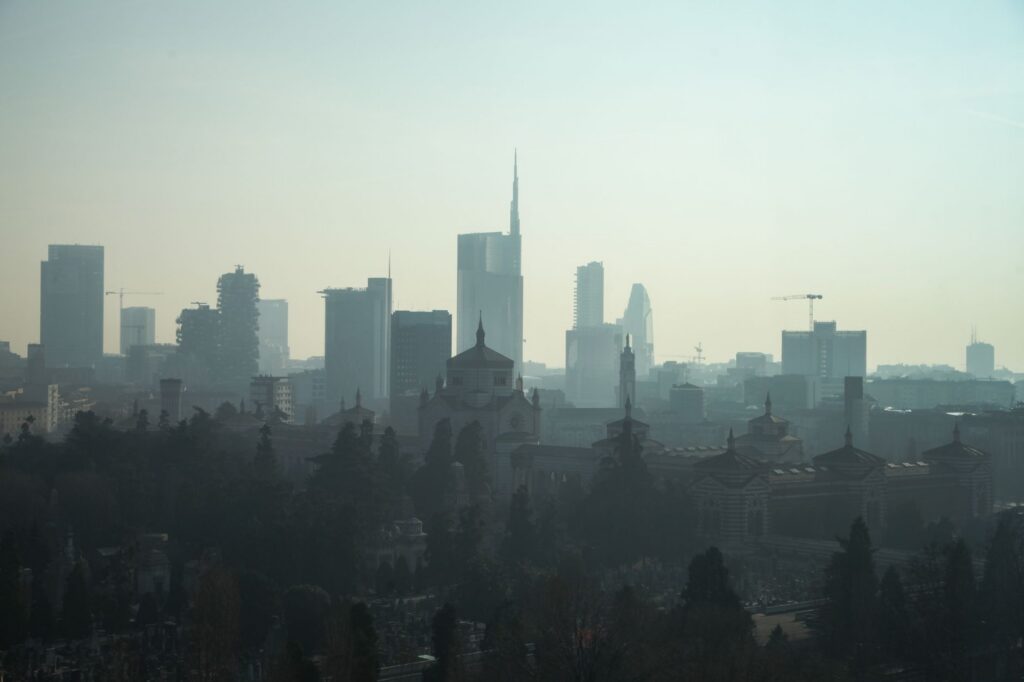
PM2.5 is fine particle pollution: solid particles and liquid droplets in the air with diameters generally 2.5 micrometers and smaller, according to the EPA. Ground-level ozone is a gas that forms when nitrogen oxides and volatile organic compounds react in sunlight. Ozone is usually worst on hot, sunny afternoons, while EPA’s AirNow says particle pollution can be a problem at any time of year, depending on where you live.
Each pollutant gets its own AQI value, and the higher one becomes the AQI reported for your area. So the same orange category can come from particles on one day and from ozone on another.
What is PM2.5, and how is it different from PM10?
EPA defines particulate matter as a mixture of solid particles and liquid droplets found in the air. PM10 means inhalable particles with diameters that are generally 10 micrometers and smaller. PM2.5 means fine inhalable particles with diameters that are generally 2.5 micrometers and smaller.
EPA puts the size in perspective. The average human hair is about 70 micrometers in diameter, which makes it 30 times larger than the largest fine particle.
Some particles come straight from a source, such as construction sites, unpaved roads, fields, smokestacks or fires. EPA says most particles form in the atmosphere through reactions of chemicals such as sulfur dioxide and nitrogen oxides, which come from power plants, industries and automobiles. AirNow lists power plants, industrial processes, vehicle tailpipes, woodstoves and wildfires as sources of fine particles. Coarse particles, between 2.5 and 10 micrometers, come from crushing and grinding operations, road dust and some agricultural operations.
Size matters for health. EPA says fine particles pose the greatest risk to health because they can get deep into the lungs, and some may even get into the bloodstream.
What is ground-level ozone?
Ozone is a colorless gas that EPA describes as good or bad depending on where it is. High in the stratosphere, it forms the ozone layer that shields Earth from the sun’s ultraviolet rays. At ground level, where people breathe, it is a harmful air pollutant.
Ground-level ozone is created by chemical reactions between nitrogen oxides (NOx) and volatile organic compounds (VOCs) in the presence of sunlight. AirNow lists vehicles, industries, power plants, and products such as solvents and paints as sources of those ingredients.
When is each pollutant usually high?
EPA says ozone is most likely to reach unhealthy levels on hot, sunny days in urban environments, though it can still reach high levels during colder months. Wind can carry ozone long distances, so rural areas can also see high levels. AirNow’s ozone guide says ozone is worse in the afternoon and early evening.
AirNow’s particle pollution guide says particles can be a problem at any time of the year, depending on where you live.
The two also behave differently indoors. AirNow says ozone levels are usually lower inside. For particles, AirNow warns that when levels are high outdoors, they can be high indoors too.
| PM2.5 | Ground-level ozone | |
|---|---|---|
| What it is | Fine particles and droplets, 2.5 micrometers and smaller | A gas formed from NOx and VOCs in sunlight |
| When it tends to be high (EPA/AirNow) | Any time of year, depending on location | Hot, sunny days; worse in the afternoon and early evening |
| Indoors (AirNow) | Can be high indoors too | Usually lower indoors |
| AQI averaging time | 24 hours | 8 hours (1-hour in some areas) |
| National standard (as of November 2026) | 9.0 µg/m³ annual; 35 µg/m³ over 24 hours | 0.070 ppm over 8 hours |
How does the AQI handle PM2.5, PM10 and ozone?
EPA converts each pollutant’s concentration to the AQI scale using its own breakpoints. The table shows the breakpoints in EPA’s AQI Technical Assistance Document (May 2026 edition). PM values are 24-hour averages in micrograms per cubic meter (µg/m³). Ozone values are 8-hour averages in parts per million (ppm).
| AQI category | PM2.5 (µg/m³, 24-hour) | PM10 (µg/m³, 24-hour) | Ozone (ppm, 8-hour) |
|---|---|---|---|
| Good (0–50) | 0.0–9.0 | 0–54 | 0.000–0.054 |
| Moderate (51–100) | 9.1–35.4 | 55–154 | 0.055–0.070 |
| Unhealthy for Sensitive Groups (101–150) | 35.5–55.4 | 155–254 | 0.071–0.085 |
| Unhealthy (151–200) | 55.5–125.4 | 255–354 | 0.086–0.105 |
| Very Unhealthy (201–300) | 125.5–225.4 | 355–424 | 0.106–0.200 |
| Hazardous (301+) | 225.5 and higher | 425 and higher | Uses 1-hour values (0.405 ppm and higher) |
Above 0.200 ppm, EPA calculates the ozone AQI from 1-hour concentrations. Most areas report ozone from 8-hour values, but EPA notes a small number of areas where a 1-hour ozone AQI would be more precautionary. Those areas may calculate both and report the higher one.
On AirNow, each pollutant is listed with its own AQI, and the overall number is the highest of them. Note the PM2.5 Good range: a 24-hour average above 9.0 µg/m³ already counts as Moderate. Our guide to the Air Quality Index covers the categories, colors and the NowCast used for current readings.
What changed with the PM2.5 standard in 2024?
On February 7, 2024, EPA announced a final rule lowering the primary (health-based) annual PM2.5 standard from 12.0 to 9.0 µg/m³. The 24-hour PM2.5 standard stayed at 35 µg/m³. The PM10 standard stayed at 150 µg/m³ over 24 hours.
EPA changed the AQI for particle pollution in the same rule. The top of the Good range for PM2.5 moved from 12.0 to 9.0 µg/m³, and other breakpoints were revised, so Hazardous now starts at 225.5 µg/m³. The AQI changes took effect on May 6, 2024.
On March 12, 2025, EPA announced a path forward that includes reconsidering the PM2.5 standards. As of November 2026, EPA’s NAAQS table (last updated October 21, 2026) still lists the primary annual PM2.5 standard at 9.0 µg/m³. The same table lists the ozone standard at 0.070 ppm, measured over 8 hours.
Who is most sensitive to each pollutant?
EPA names different sensitive groups for each pollutant. For ozone, they are people with lung disease, such as asthma; children, including teenagers; people who are active outdoors; and older adults. For PM2.5 and PM10, they are people with heart or lung disease, older adults, and children, including teenagers.
EPA adds that some minority groups, people with lower incomes and outdoor workers may experience higher exposure to particle pollution. During smoke events, EPA recommends including pregnant people as an at-risk group. AirNow’s guides explain that children and teenagers are at greater risk because their lungs are still developing and they breathe more air per pound of body weight than adults.
What does EPA say to do when each one is high?
EPA’s cautionary statements change with the pollutant. These are quoted from EPA’s AQI guidance for the Unhealthy for Sensitive Groups (orange) category:
- Ozone: “Sensitive groups: Make outdoor activities shorter and less intense. Take more breaks. Watch for symptoms such as coughing or shortness of breath. Plan outdoor activities in the morning when ozone is lower.”
- PM2.5: “Sensitive groups: Make outdoor activities shorter and less intense. It’s OK to be active outdoors but take more breaks. Watch for symptoms such as coughing or shortness of breath.”
AirNow’s ozone guide also lists moving an activity inside, where ozone levels are usually lower. AirNow’s particle pollution guide suggests reducing use of fireplaces and wood stoves, not using candles or smoking indoors, and using HEPA filters or a portable air cleaner designed to reduce particles. When smoke is the source, our guide to wildfire smoke and air quality adds EPA and CDC smoke guidance. Your state or local air agency issues alerts for your area.
Bottom line
PM2.5 is a mix of tiny particles and droplets; ozone is a gas made by sunlight acting on other pollutants. Ozone tends to peak on hot afternoons and is usually lower indoors. Particles can be high in any season and can get indoors. EPA reports a separate AQI for each, and the higher value sets the day’s number. You can check current AQI readings from AirNow monitors by city to see which pollutant is listed where you are.
FAQ
Why does EPA treat PM2.5 and ozone separately?
They are different substances with different health effects and separate national standards. EPA links particle exposure to effects on both the lungs and the heart, including heart attacks and aggravated asthma. It links ozone to coughing, difficulty breathing deeply and more frequent asthma attacks.
Can ozone be high in winter?
Yes, in some places. EPA says ozone is most likely to reach unhealthy levels on hot, sunny days but can still reach high levels during colder months.
Is the 9.0 PM2.5 standard still in effect?
As of November 2026, EPA’s NAAQS table lists the primary annual PM2.5 standard at 9.0 µg/m³. EPA announced in March 2025 that it would reconsider the standard, so check EPA’s particulate matter pages for the current status.
Does PM10 matter if PM2.5 is low?
It can. EPA calculates a separate AQI for PM10, and if PM10 has the highest value, it sets the reported AQI. AirNow lists road dust, crushing and grinding operations and some agricultural operations as sources of coarse particles.