Stuck in Your Car in a Winter Storm: What to Pack and Do
Live now: 20 active NWS winter alerts (7 Winter Storm Warnings, 2 Winter Storm Watches). See blizzard and winter storm warnings by state
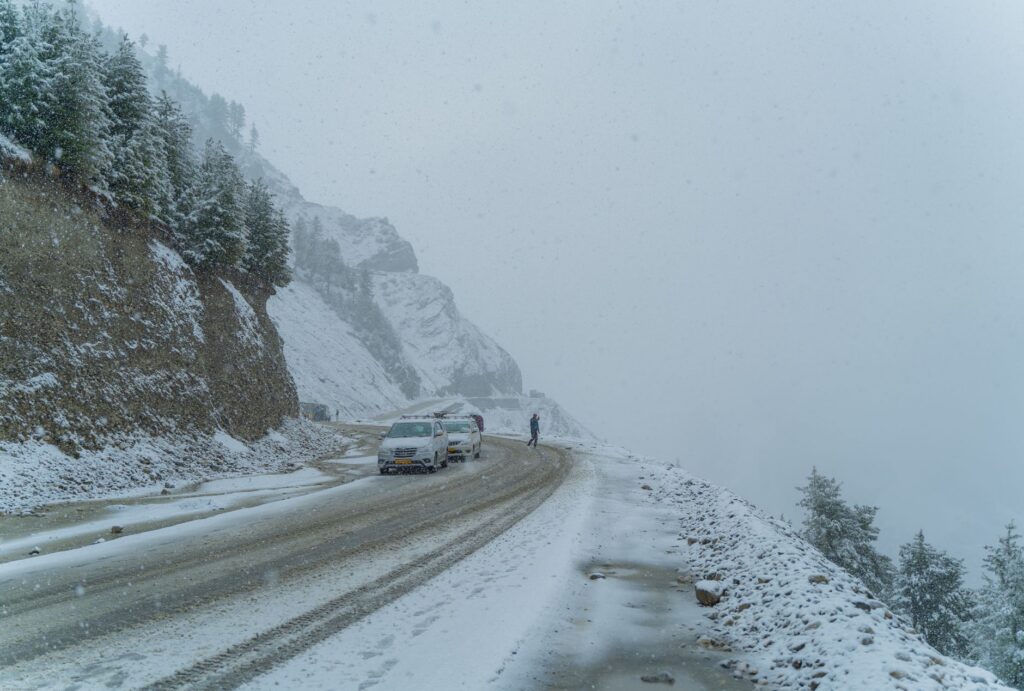
If your car gets stuck in a winter storm, the National Weather Service (NWS) says to stay in the vehicle, because you can become disoriented quickly in wind-driven snow and cold. Run the engine about 10 minutes each hour for heat, open a window a little for fresh air and keep snow cleared from the exhaust pipe so carbon monoxide does not build up. Make yourself visible to rescuers while you wait.
Why should you stay in the car?
The NWS winter storm safety page gives one instruction for a stuck vehicle: stay in it. Leaving makes you lose your bearings quickly when snow is blowing and it is cold. The car also gives you shelter from the wind and a way to run heat in short periods.
Moving around still matters while you wait. The NWS suggests moving your arms, legs, fingers and toes vigorously from time to time to keep blood circulating. It warns against overexertion such as pushing a car or walking in deep snow if you are not in good health, since the strain of cold and heavy labor may cause a heart attack, and sweating can lead to a chill and hypothermia.
How do you run the engine safely?
Follow the NWS steps in this order:
- Run the motor about 10 minutes each hour to get heat.
- Open the window a little while the motor runs, so fresh air comes in and carbon monoxide poisoning is avoided.
- Clear snow from the exhaust pipe to avoid gas poisoning.
The NWS names both fresh air and a clear exhaust pipe as protection against carbon monoxide and gas poisoning.
What does carbon monoxide do?
Carbon monoxide (CO) is a colorless, odorless gas that is not irritating at first, according to the Wikipedia article on carbon monoxide poisoning. It forms when carbon-based fuels burn incompletely, which can happen in motor vehicles, cooking equipment and heaters. Because you cannot smell it, symptoms are the warning. The article lists headache, dizziness, weakness, vomiting, chest pain and confusion, often described as flu-like. Large exposures can lead to loss of consciousness, seizures or death.
The same article says poisonings occur more often in winter, and that in the United States non-fire cases cause more than 400 deaths a year and more than 20,000 emergency room visits. Its prevention list includes carbon monoxide detectors, venting of gas appliances and keeping vehicle exhaust systems in good repair.
How do you make rescuers see you?
- At night, turn on the dome light while the engine is running.
- Tie a bright cloth, preferably red, to the antenna or a door.
- After the snow stops falling, raise the hood to show you need help.
What should be in a winter storm kit for the car?
The NWS page Prepare! Don’t Let a Winter Storm Take You by Surprise recommends that you fully check and winterize your vehicle before winter and carry a Winter Storm Survival Kit with:
- Mobile phone, charger and batteries
- Blankets or sleeping bags
- Flashlight with extra batteries
- First-aid kit
- Knife
- High-calorie, non-perishable food
- Extra clothing to keep dry
- A large empty can to use as an emergency toilet, plus tissues, toilet paper and paper towels
- A small can and waterproof matches to melt snow for drinking water
- A sack of sand or cat litter for traction
- Shovel, windshield scraper and brush
- Tool kit, tow rope and battery booster cables
- Water container
- Candle and matches for light and, in an emergency, heat
- Compass and road maps, so you do not depend on a phone with limited battery life
The NWS also says that if you can, keep the gas tank near full to avoid ice in the tank and fuel lines, and check that fluid levels, lights, heater and wipers are in good condition.
What should you do before you set out?
The NWS tells drivers to let someone know the timetable and the primary and alternate routes. If something happens, that person knows where to start a search. It also advises against traveling alone and recommends calling 511 before leaving for the latest traffic, road incident, construction and weather information. Every state offers this Department of Transportation service. Leave with a fully charged phone, a car charger and the emergency kit in the vehicle.
The agency adds a driving warning: more than 5,000 people are killed and more than 418,000 injured each year, on average, in weather-related vehicle crashes. Even roads that look wet can be slick, and the NWS says that when the temperature is near freezing you should drive as if on ice. For why roads stay slick after plows pass, see this explainer on road salt and snowplows.
How do alerts and outages fit in?
The differences between NWS alert types are covered in blizzard warnings and winter storm warnings. If the storm takes out power at home, the guide to why ice brings power lines down explains the cause. Follow your local emergency officials and the National Weather Service for instructions in your area.
Quick answers
How often should I run the engine?
The NWS says about 10 minutes each hour, with a window open a little for fresh air.
Should I walk to find help?
The NWS says to stay in the vehicle. Leaving it risks disorientation in wind-driven snow and cold.
What if the snow stops falling?
Raise the hood to indicate you need help, and keep the exhaust pipe clear of snow while the engine runs.
Checked against official sources in November 2026. Alert criteria, records and guidance are revised: check the official agency page for current information.