Road Salt and Snowplows: Why Some Streets Stay Icy After a Storm
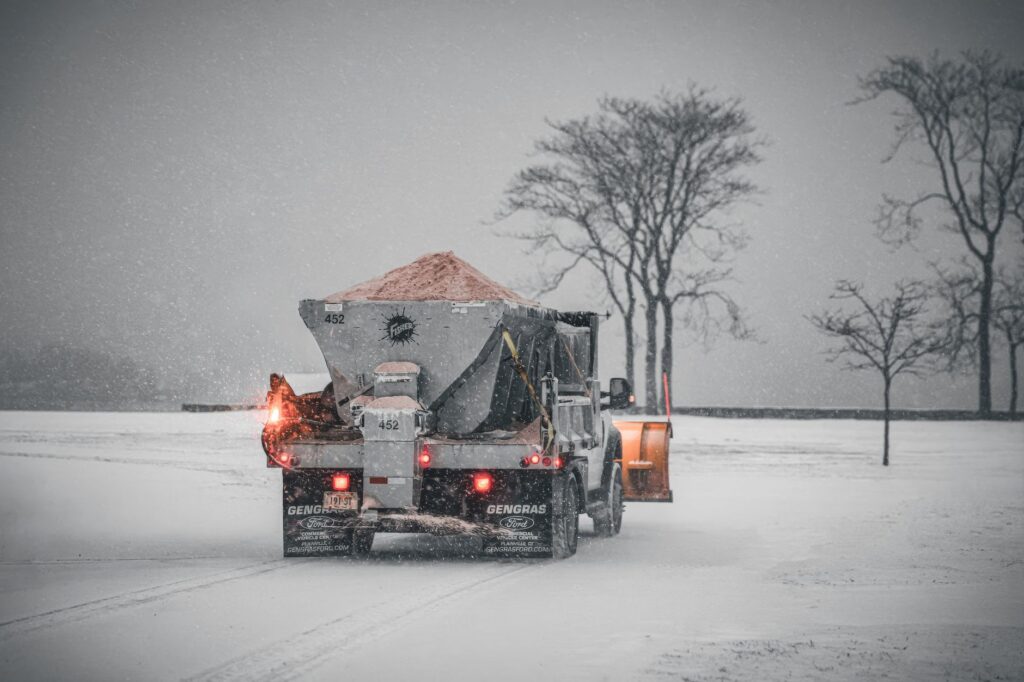
Streets stay icy after a storm for two main reasons: ordinary rock salt stops working in deep cold, and cities clear roads in a set order, with main routes first and side streets later. Salt brine made from sodium chloride freezes at 0 °F (−18 °C), so on the coldest nights rock salt does little. Many cities also declare a snow emergency with parking rules so plows can reach every street in turn.
How does road salt melt ice?
Salt lowers the temperature at which water freezes. Chemists call this freezing-point depression. When salt dissolves in the thin film of water on ice or snow, the mixture needs colder air to freeze again, so the ice melts and new ice has a harder time forming. Grains of salt also give tires a little extra grip, according to the Wikipedia article on road salt.
The most common road salt is sodium chloride, the same compound as table salt. Road crews also use calcium chloride and magnesium chloride, mostly when it is colder. Solid salt is often pre-wet before it leaves the truck because wet salt starts melting sooner and sticks to the pavement instead of bouncing off.
When does salt stop working?
Rock salt loses its punch as temperatures fall. Brine made from ordinary rock salt freezes at −18 °C (0 °F), and at that point it no longer melts anything, according to the Wikipedia article on snow removal. Dry rock salt is also the form most easily thrown off the road by passing traffic, which is one reason a treated street can turn slick again.
For colder conditions, crews switch to other products:
- Calcium chloride and magnesium chloride push the freezing point of water much lower than sodium chloride does, and they release heat as they dissolve, which helps melt ice.
- Blends of salt with organic byproducts from sugar beet refining or ethanol distillation spread more easily and keep working down to −34 °C (−30 °F).
- Liquid melters, used more widely since the 1990s, are sprayed from nozzles. They work better at keeping ice from bonding to pavement than at melting through ice that is already there.
Thin glaze from freezing rain is especially hard to treat once it bonds to the road. Our explainer on how air layers decide between freezing rain, sleet and snow covers why that glaze forms.
Why do crews spray roads before the snow starts?
Treating roads ahead of a storm is called anti-icing. Crews put down brine or wetted salt on dry or wet pavement shortly before snow or freezing rain begins. The goal is to stop ice from bonding to the surface, so plows can scrape snow off more easily later. Done properly, anti-icing can cut the total amount of salt a city needs, and it is generally considered more efficient than de-icing when the forecast is right.
De-icing is the opposite approach: salt goes down after snow or ice has already formed. It still works, but it takes more material and more time, and side streets treated this way may stay rough for longer.
How do cities decide which streets get plowed first?
Most cities plow by priority. Main roads and emergency routes come first, then residential streets. Rules vary by city, and the Wikipedia article on snow emergencies gives several examples:
- Minneapolis uses a 3-day plan. Main routes are plowed on day one, the even-numbered side of streets on day two, then the odd side.
- Saint Paul, Minnesota, splits streets into night plow routes, which are cleared soon after a snow emergency is declared, and daytime routes, cleared on the second day.
- Toronto marks snow routes with signs so roads stay open for emergency vehicles and others who must travel. Cars parked on those routes are ticketed and towed.
In many Canadian cities, snow routes and winter parking limits run from December to March. In Ohio, county sheriff’s departments declare snow emergencies on one of three levels, each with its own guidance or requirements for the public.
What is a snow emergency and why does parking matter?
A snow emergency is a city or county’s response plan when a storm hits hard. It is usually declared by the mayor or another top official, typically after the storm has arrived. Officials take National Weather Service products such as Winter Storm Warnings, Lake Effect Snow Warnings, Blizzard Warnings and Winter Weather Advisories into account.
Parking restrictions are the part most residents notice. A plow cannot clear the curb lane if cars are parked there, so a street with parked cars can keep a band of packed snow and ice for days. Cities announce emergencies through local broadcasters, reverse 911 calls, mass text alerts, public address systems or lighted signals. Schools and public offices may also close; our guide to how school districts decide on a snow day explains that side of it.
In severe storms, a governor can declare a statewide state of emergency, which can allow driving bans, curfews and the use of extra personnel, equipment and shelters.
Why do icy roads matter so much for safety?
The Federal Highway Administration reports that, on average from 2019 to 2023, 18 percent of weather-related crashes happened during freezing precipitation such as snow, sleet, hail or freezing rain. That amounts to an estimated 219,942 crashes and 407 deaths a year. On city streets with traffic signals, speeds can drop 30 to 40 percent on snowy or slushy pavement. On freeways, heavy snow can cut average speeds by 5 to 40 percent.
Where did road salting start?
Large-scale salting began in Paris in the early 20th century to fight black ice. In the United States, New Hampshire experimented with spreading granular sodium chloride in 1938, and by the winter of 1941-1942 it had adopted a statewide policy, with about 5,000 tons of salt applied on U.S. highways that season. Until the 1970s, workers often spread salt by shovel from trucks. Salt also has costs: chloride builds up in soil, streams and groundwater, and it corrodes cars, bridges and the steel inside concrete.
Quick answers
Why is my side street still icy when the highway is clear?
Cities plow main routes first and residential streets later. In cities with snow emergency plans, such as Minneapolis, side streets may wait until day two or three.
Does salt work in very cold weather?
Ordinary rock salt brine freezes at 0 °F (−18 °C). Crews use calcium chloride, magnesium chloride or salt blends when it is colder.
Why do roads look wet before a storm?
That is usually brine from anti-icing, sprayed ahead of snow or freezing rain to keep ice from bonding to the pavement.
Where do I find my city’s plow rules?
Check your city or county website and local alerts. Rules for snow routes, parking and plow order differ from place to place, and the National Weather Service issues the winter warnings officials use.
Checked against official sources in November 2026. Alert criteria, records and guidance are revised: check the official agency page for current information.