Canadian Wildfire Smoke Crossed the Atlantic to Greece in Five Days
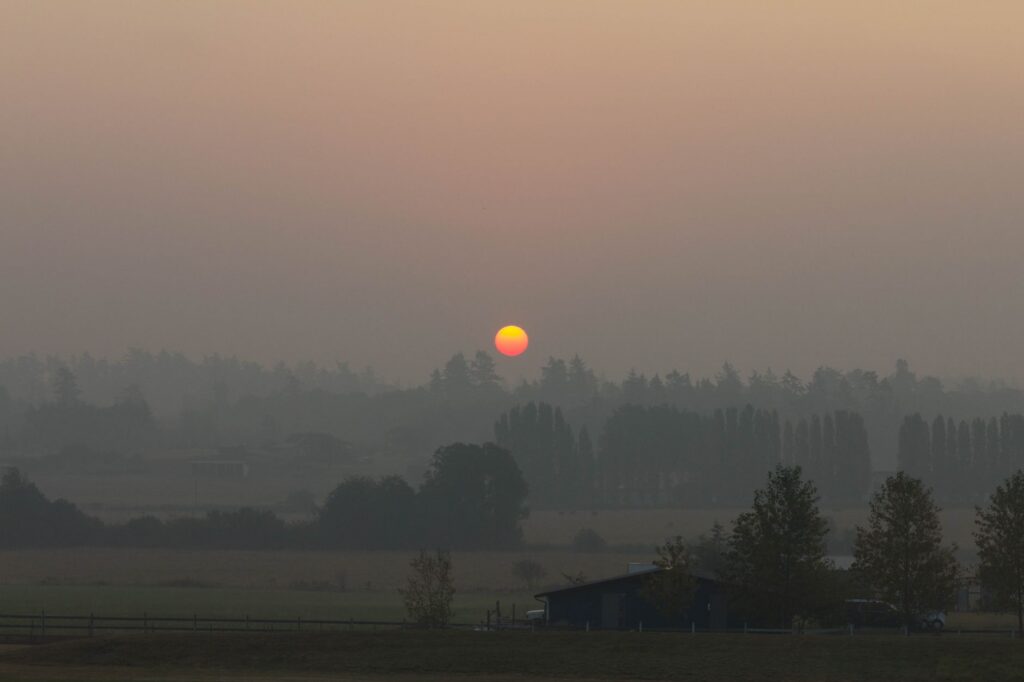
Smoke from wildfires in Canada reached Thessaloniki, Greece, in five days after crossing the Atlantic, according to research by the Laboratory of Atmospheric Physics at Aristotle University of Thessaloniki (AUTH), reported by eKathimerini on Nov. 26. The study looked at July 2024, when smoke from major Canadian fires drifted over the city.
This is a research finding about a past event, not a current alert. For present air quality, readers should check official local sources.
How the smoke was tracked
Researchers monitored airborne particles above the city for almost two years. They used a LiDAR system, an instrument that sends out laser light and reads what comes back, to study the atmosphere at different altitudes and work out what the particles were made of and where they came from.
The team first detected a layer of smoke on July 22 at an altitude of around six kilometers. From July 24 to 26, the instrument recorded several smoke layers at different heights, between five and eight kilometers.
What happens to smoke on a long trip
Georgia Peletidou, a PhD candidate at the laboratory and the author of the study, told Kathimerini that the particles change on the way. Exposure to shifting atmospheric conditions causes physical and chemical transformations, a process called atmospheric ageing.
What else is in the air over Thessaloniki
Particles from urban and industrial emissions, vehicle traffic and home heating were the most frequent ones detected. The measurements also found Saharan dust, wildfire smoke from distant continents, sea particles and biological material such as pollen.
“Thessaloniki is a crossroads of air masses from many different sources,” Peletidou said. Beyond local pollution, she explained, the city receives particles carried from the Balkans and Eastern Europe, and from farther regions including North Africa and North America.
The mix changes with the seasons, the study found:
- Saharan dust arrives more often in spring, summer and autumn.
- Wildfire smoke is mainly detected in summer.
- Biological particles, including pollen, increase in spring and summer, depending on vegetation and flowering cycles.
- Particles from traffic, industry and home heating are present all year.
Why it matters
The study documents that smoke from fires on one continent can show up in the air above a city on another within days, at heights of several kilometers. Whether such smoke reaches the ground, and in what amounts, is a separate question that this report does not address. For air quality readings where you live, see the guide to reading the AirNow smoke map.
Source: eKathimerini