Deadliest Earthquakes in History: Death Tolls and Why They Differ
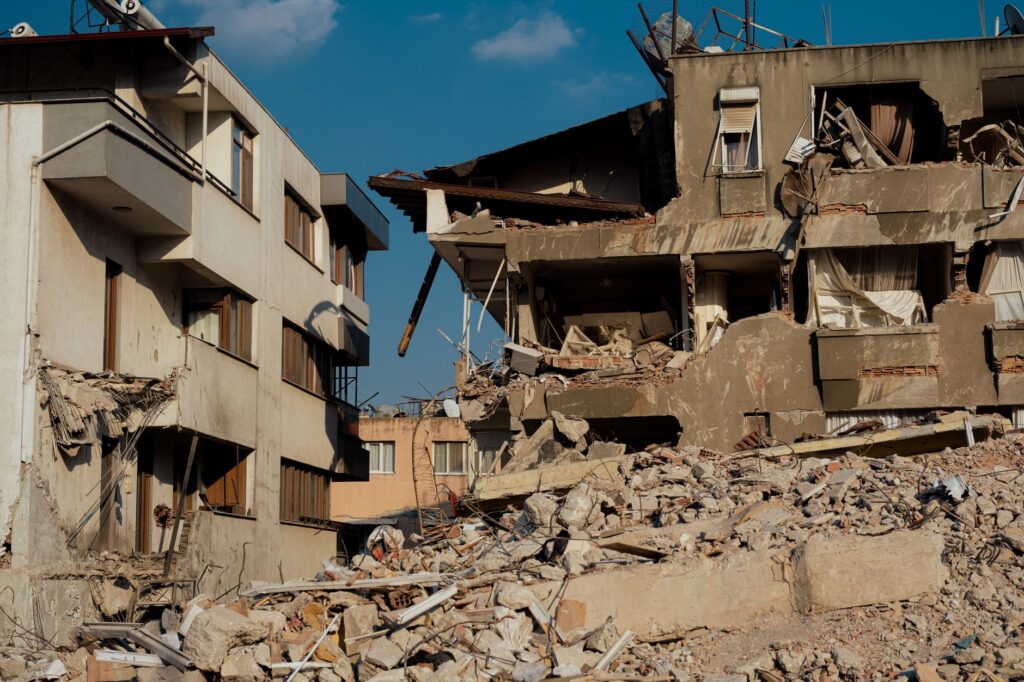
The highest death tolls on record for a single earthquake are about 316,000 for Haiti on Jan. 12, 2010, and 300,000 or more for Tangshan, China, on July 28, 1976. Both appear among the ten deadliest natural disasters on the Wikipedia list of natural disasters by death toll, which uses the highest published estimate for each event. For older quakes, and for some modern ones, the estimates differ by a wide margin depending on who counted and what they included.
Which earthquakes have the highest death tolls?
Five earthquakes appear in the all-time top ten of natural disasters, which excludes epidemics and famines. The list gives these highest estimates:
- 2010 Haiti earthquake, Jan. 12, 2010: 316,000. Our own account is in the article on what happened in Haiti and why it was so deadly.
- 1976 Tangshan earthquake, Hebei, China, July 28, 1976: 300,000+.
- 526 Antioch earthquake, May 526, in the Byzantine Empire (present-day Hatay Province, Turkey): 300,000.
- 1920 Haiyuan earthquake, Ningxia, China, Dec. 16, 1920: 273,407.
- 1139 Ganja earthquake, Sept. 30, 1139, in the Seljuk Empire and Kingdom of Georgia (present-day Azerbaijan): 300,000.
The same table is topped by floods and cyclones, which are not earthquakes: the 1931 China floods at 4,000,000 and the 1887 Yellow River flood at 2,000,000.
How deadly were the worst quakes of the 20th century?
The page’s year-by-year table lists the deadliest natural disaster of each year, and earthquakes fill many of the slots. Ranges are shown where sources disagree:
- 1908 Messina earthquake, Italy, Dec. 28: 75,000 to 82,000. See the Messina article for the toll and the tsunami.
- 1915 Avezzano earthquake, Italy, Jan. 13: 29,978 to 32,610.
- 1920 Haiyuan earthquake, China and Mongolia, Dec. 16: 258,707 to 273,407.
- 1923 Great Kantō earthquake, Japan, Sept. 1: 105,385 to 142,800.
- 1927 Gulang earthquake, China and Tibet, May 22: 40,912.
- 1939 Erzincan earthquake, Turkey, Dec. 27: 32,700 to 32,968.
- 1948 Ashgabat earthquake, Soviet Union and Iran, Oct. 6: 10,000 to 110,000.
Turkey appears twice in that list, along with the 526 Antioch quake in what is now Hatay Province. For the fault system behind that record, see why Turkey has so many earthquakes.
Why do death tolls for the same earthquake differ?
The List of deadly earthquakes since 1900 says its figures “vary widely in quality” and are often only estimates, especially for the most catastrophic events. It combines several catalogs that count different things at different times.
The PDE (the U.S. Geological Survey’s Preliminary Determination of Epicenters) gives two figures: deaths from shaking alone, meaning partial or total building collapse, and total deaths including secondary effects. Its numbers usually come from officials, humanitarian agencies or media reports in the days and weeks after the quake. The catalog is not revised when better information arrives after its final publication, which usually comes four months after the earthquake.
The Utsu catalog of deadly earthquakes generally gives total deaths and is complete up to late 2003. EM-DAT, the Emergency Events Database run by the Centre for Research on the Epidemiology of Disasters at the University of Louvain in Brussels, covers many types of disaster. Its earthquake source details are often missing, incomplete or wrong, and when a quake crosses borders its entries may be split by country. A fifth column carries improved estimates from official reports and scholarly studies where they exist.
How much do tsunamis, fires and landslides change the count?
Secondary effects can add or hide thousands of deaths. The PDE flags them as T for tsunami, L for landslide, F for fire and Lq for liquefaction (ground that behaves like liquid). Where they are not separated, a toll mixes shaking deaths with deaths from other causes.
Several 1900s entries show how far catalogs can sit apart:
- 1906 San Francisco earthquake (magnitude 7.8, fire flagged): 700 in the Utsu catalog, 2000 in EM-DAT.
- 1906 Valparaíso earthquake, Chile (magnitude 8.2, tsunami flagged): 3760 in Utsu, 20000 in EM-DAT.
- 1905 Calabria earthquake, Italy (tsunami flagged): 557 in Utsu, 2500 in EM-DAT.
- 1906 Ecuador and Colombia earthquake (tsunami flagged): 1000 in Utsu, 400 in EM-DAT.
The last entry runs the other way, with the later database showing the lower figure.
Which number should a reader use?
When a source gives a range, the range is the honest answer. For example, the Wikipedia tables give 10,000 to 110,000 for Ashgabat in 1948, which is a spread of more than a hundred thousand lives. For a single quote, name the catalog with it: “316,000 for Haiti, highest estimate” says more than the number alone.
Quick answers
What is the deadliest earthquake ever recorded?
On the Wikipedia top-ten list, the 2010 Haiti earthquake has the highest estimate at 316,000. The Tangshan quake of 1976 follows at 300,000+, and Antioch in 526 and Ganja in 1139 are each listed at 300,000.
Are old and new death tolls equally reliable?
The source pages do not say so. They describe the figures as varying widely in quality, and they note that catalogs such as Utsu stop at late 2003 and that PDE numbers are not updated after about four months.
Why does one quake show different tolls in different places?
Catalogs count different things. Some record only deaths from shaking, others add tsunamis, fires and landslides, and some split a cross-border quake by country.
Checked against official sources in November 2026. Alert criteria, records and guidance are revised: check the official agency page for current information.