Grand Canyon Dragon Bravo Fire Review Cites Leadership Failures
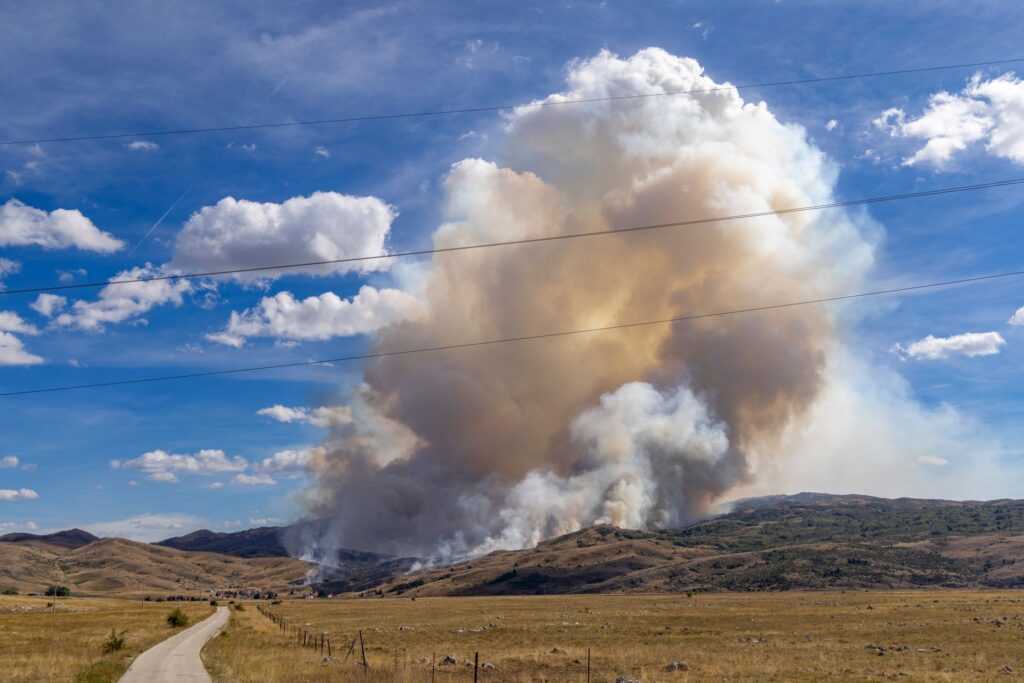
Reviewers appointed by the Department of Interior released their findings Tuesday on the 2025 Dragon Bravo Fire, which destroyed dozens of historic structures on the North Rim of Grand Canyon National Park. The review, as reported by Wildfire Today, points to weak leadership and broken decision-making rather than a single mistake.
The reviewers did not name one decision, action or person as solely responsible. They described problems built into how the fire response was run, and said those problems grew worse as fire behavior changed quickly and other fires in the region competed for resources.
What the review says went wrong
The report lists several weaknesses: authority that did not match who was physically on site, a decline in discipline under the National Incident Management System, too little delegation and too little documentation of decisions, poor preparation for fires near developed areas, and uneven translation of national direction into field practice.
In the reviewers’ words, “systems existed, but were not followed.” They also found that communication between operations staff and the people making decisions was not effective.
The confine-and-contain decision
According to the report, the park superintendent, who was also serving as the Agency Administrator on the fire, chose a confine-and-contain strategy on July 6. That approach focuses on drawing a perimeter around the fire, using natural or built barriers, to limit its spread. A full suppression response aims to put the fire out entirely.
Officials wrote that the superintendent reaffirmed the strategy as the fire kept burning for days, without reassessing the situation even though regional fire risk was elevated. The fire crossed the established perimeter and burned into the North Rim developed area. The report says officials allegedly did not make that area a priority in their decisions.
Fire behavior intensified sharply between July 11 and July 13. Multiple structures burned during that stretch, including the historic Grand Canyon Lodge.
Delays in tools and resources
The reviewers also faulted approvals for suppression tools. Mechanized equipment and retardant were approved late, and communication among incident command, park leadership and interagency partners was fragmented, the report said.
More firefighting resources were available in the wider regional and national system. They were not ordered at a scale or pace that fit the growing risk and complexity of the fire during its critical early periods, according to the report.
The five core conclusions
- Leadership qualifications, authority and availability on site did not match the complexity of the incident.
- Decision authority and delegation at the scene did not keep up with changing conditions, fire behavior and complexity.
- National fire posture and direction were not clearly conveyed, understood and enforced by the people on scene.
- Interagency partners were not fully included in planning and decisions, as agreements and best practice require.
- Risk reduction before the fire, compliance and operational readiness did not support suppression under extreme conditions.
Why it matters
The Grand Canyon Lodge was among the structures lost on the North Rim, a historic part of a national park. The review frames the outcome as a failure of management systems that were already in place, which makes the findings relevant to how land management agencies handle fires near developed areas and how they bring in partner agencies.
The report was released Tuesday, and Wildfire Today covered its conclusions. Readers who want official information about fires and conditions near them should check with local emergency officials and the National Weather Service.
Source: Wildfire Today