Two-Hour Delay vs School Closure: Buses, Snow Routes and Makeup Days
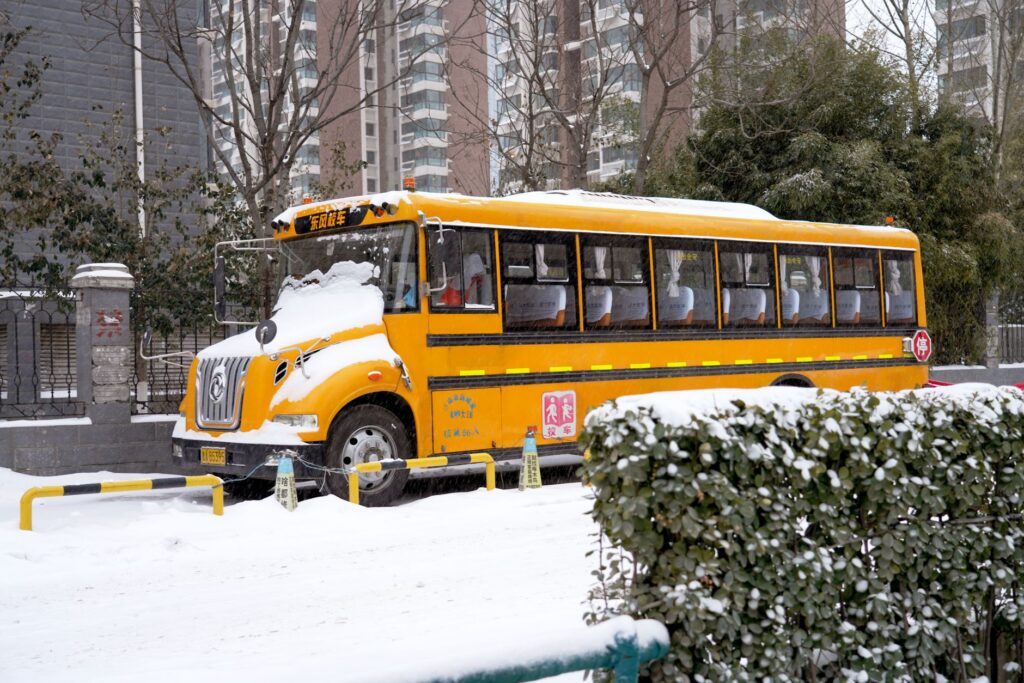
A two-hour delay means school starts two hours later than usual, and buses may run on different routes with different stops. A closure cancels classes for the day, and the district may have to make that day up later in the year. An early dismissal sends students home before the normal bell, so families need someone ready to receive them. Each district sets its own details, including meals, so the district’s own notice is the final word.
What does a two-hour delay change?
A delay pushes the start of school back two hours and often cuts back bus service and activities. Seattle is a clear example of how much can change. Seattle Public Schools says that on a two-hour late start its buses run only for full-day, in-district general education, special education, preschool and Head Start students. Out-of-district transportation does not run that day, and field trips and sporting events are canceled.
Part-day programs are affected too. In Seattle, the morning sessions of the Seattle Skills Center are canceled on a late-start day. Afternoon sessions are held, but students who normally ride a yellow bus at midday get no ride to them. Buses do run at the end of the day.
The pages we checked do not say how breakfast or lunch is handled on a delay day. Meal service differs by district, so look for it in your district’s notice or call the school.
Where does the bus stop on a snow route?
On a snow route, the bus stops on a main road, and that stop may be in a different place and at a different time than the regular one. Seattle designs its snow routes around the roads the Seattle Department of Transportation clears first. The district mails each family the student’s snow route, stop location and times in December, and families can also see the route in their parent or guardian account.
Students who get curb-to-curb service may have their stop moved to a safer location chosen by the transportation department. If a student rides with an alternative provider such as a ride service under contract with the district, Seattle says the provider will try the regular pick-up spot and will notify the family if it cannot reach it safely.
Road clearing takes time. Seattle’s transportation department says its crews work 24 hours a day in a severe snowstorm to clear the streets that buses and emergency services use, and that it may take up to 12 hours after a break in the storm to clear them all. Public transit may run its own snow routes, which matters for students who take a city bus to school.
What happens when school is closed?
A closure cancels classes, and the missed day usually counts against a limited number of snow days in the calendar. According to Wikipedia’s article on weather-related cancellations, most areas build extra days into the school calendar so that schools still reach the required number of days or hours of instruction. If closures use up those days, the missed days must be made up. Schools do that by opening on some federal holidays, shortening spring break, holding Saturday classes, lengthening school days or ending the year later. Some states require every snow day to be made up, and New Jersey is given as an example.
Some districts now switch to remote classes instead. Baltimore County Public Schools says Maryland lets local school systems use inclement weather days as virtual school days, and the district plans to move to virtual learning after three traditional weather closures.
The main test for a snow day in the United States and Canada is whether school buses can run their routes safely and whether children who walk to school are in danger, the same article says. Local experience counts. In places that rarely see snow, an inch or two can make roads unsafe, while some large northern cities can clear 10 or more inches of overnight snow and ice before the morning commute.
What should families do about an early dismissal?
Families should have a plan before the storm for who will meet a child who comes home early. Seattle Public Schools recommends that every family keep an emergency weather plan and arrange for a neighbor, family member or care center to receive students if a parent has to be elsewhere. The district also asks parents to tell children to go straight home or to their care center when they arrive.
Districts announce early dismissals through the same channels as delays and closures. The pages we checked do not give release times or bus schedules for an early dismissal, so check the notice your district sends that day.
When and how do districts announce the decision?
Most morning decisions go out before dawn, and broadcast and online channels are often faster than the phone call. Seattle sends a recorded call and an email between 5 and 6 a.m. when snow or ice affects schools. It lists the channels it uses in this order:
- Local television and radio stations
- The district’s social media accounts
- District and school websites
- Phone calls, emails and text messages to families
The district notes that the first channels may be quicker to check than waiting for the call.
Montgomery County Public Schools in Maryland runs a text and email service called Alert MCPS. Signing up is free, though a wireless carrier may charge for text messages. Weather messages go out in English and Spanish. The district also has a recorded information line, and staff answer calls from 7:30 a.m. to 5:00 p.m., Mondays through Fridays.
A school decision often follows a National Weather Service alert the evening before. It helps to know how a watch, a warning and an advisory differ. Ice is a common reason for delays, and our guide to ice storm warnings in Maine explains that alert. In western and central New York, lake-effect snow warnings can cover one district and miss the next.
Quick answers
Do buses run on a two-hour delay?
Usually yes, though service can be reduced. In Seattle, buses run on snow routes for full-day in-district students, and out-of-district transportation is canceled.
Are sports and field trips canceled on a delay day?
In Seattle they are. Other districts decide for themselves, so check your district’s notice.
Do snow days have to be made up?
That depends on the state and the district. Many calendars include built-in snow days, and closures beyond that number are made up later. Some states have waived make-up days in certain years.
Who decides about weekend activities in school buildings?
That varies. In Montgomery County, Maryland, weekend decisions are made by the county’s Interagency Coordinating Board, which handles the use of public facilities.
Checked against official sources in November 2026. Alert criteria, records and guidance are revised: check the official agency page for current information.