Hurricanes in Texas: Season Dates, Galveston and Harvey Facts
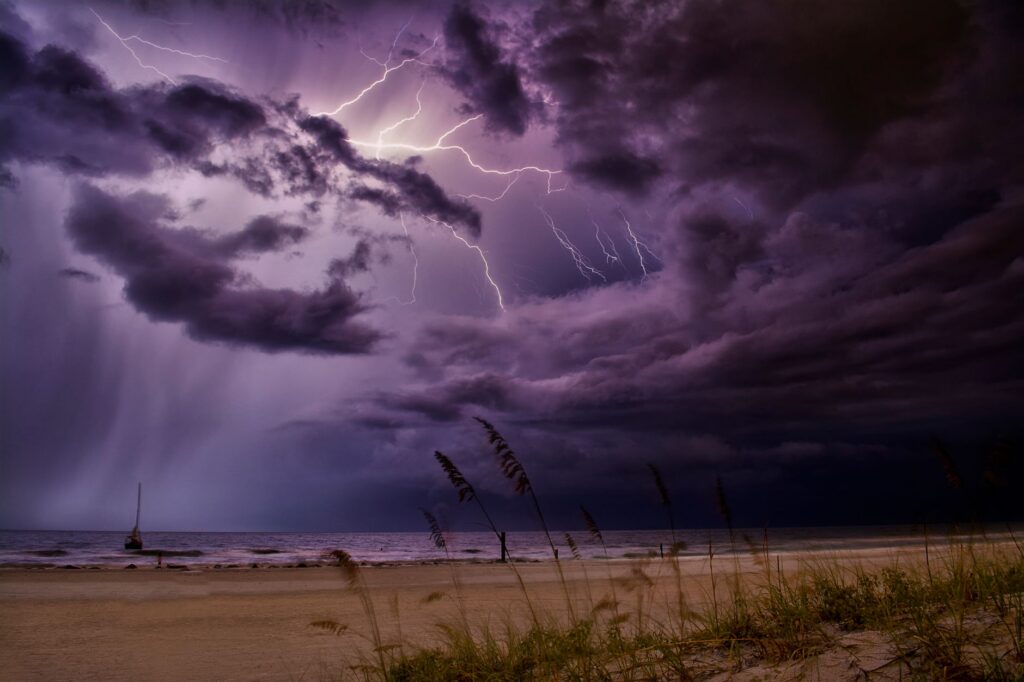
Texas hurricane season follows the Atlantic calendar, June 1 to Nov. 30, and the National Hurricane Center (NHC) puts the peak of the season at Sept. 10. Wikipedia’s list of Texas hurricanes, which draws on NHC data, says only Florida has had more hurricanes affect it, and that storms in Texas go back to 1527. Two of them set the benchmarks: the 1900 Galveston hurricane, the deadliest natural disaster in U.S. history, and Hurricane Harvey in 2017, which tied Katrina as the costliest tropical cyclone on record.
When is hurricane season in Texas?
The Atlantic season runs from June 1 to Nov. 30. The NHC defines the Atlantic basin as the Atlantic Ocean, the Caribbean Sea and the Gulf of America, so storms in the western Gulf fall inside the same season. The NHC adds that tropical cyclone activity sometimes occurs before and after those dates.
Activity is not spread evenly. The NHC says the peak is Sept. 10, with most activity between mid-August and mid-October. Using the 30-year period from 1991 to 2020, an average Atlantic season has 14 named storms, 7 hurricanes and 3 major hurricanes. The first named storm typically forms in mid to late June, the first hurricane in early to mid-August and the first major hurricane in late August or early September. In the NHC’s table of average dates, the first named system arrives by June 20, the first hurricane by Aug. 11 and the first major hurricane by Sept. 1. The NHC cautions that individual seasons can differ considerably from these averages.
Other basins keep different calendars, which our guide to hurricane season dates by basin covers. Florida, the one state ahead of Texas on the list, has its own page on Florida hurricane season dates and landfalls.
What counts as a hurricane?
The NHC classifies tropical cyclones by maximum sustained winds:
- Tropical depression: 38 mph or less.
- Tropical storm: 39 to 73 mph.
- Hurricane: 74 mph or higher.
- Major hurricane: 111 mph or higher, which is Category 3, 4 or 5 on the Saffir-Simpson Hurricane Wind Scale.
Our explainer on tropical depression, tropical storm and hurricane thresholds goes through each step.
What happened in the 1900 Galveston hurricane?
The 1900 Galveston hurricane killed between 6,000 and 12,000 people. The number most cited in official reports is 8,000. It is the fourth-deadliest Atlantic hurricane on record as of 2026.
A ship spotted the system on Aug. 27, 1900, about 1,000 miles east of the Windward Islands. It crossed the Caribbean, struck the Dominican Republic as a weak tropical storm and then Cuba, and reached the Gulf of Mexico on Sept. 6, where it became a hurricane. It peaked as a Category 4 with maximum sustained winds of 145 mph on Sept. 8 and came ashore early on Sept. 9 south of Houston.
Storm surge put 8 to 12 feet of water over the city of Galveston. About 7,000 buildings were destroyed, including 3,636 homes, and every dwelling in the city had some damage. Roughly 10,000 people were left homeless out of a population of fewer than 38,000. Total damage across the storm’s path exceeded $35.4 million at the time, which the page puts at $1.3 billion in 2023 dollars.
What changed in Galveston afterward?
Three engineers designed and oversaw a plan to raise the Gulf shoreline of Galveston Island by 17 feet and build a seawall 10 miles long. The page also says the disaster ended Galveston’s Golden Era, because investors worried by the storm turned to Houston instead.
Why was Hurricane Harvey so destructive?
Hurricane Harvey was a Category 4 storm with peak 1-minute sustained winds of 130 mph, but rain did most of the damage. It formed on Aug. 17, 2017, weakened over the Caribbean, then redeveloped in the Bay of Campeche and intensified rapidly from Aug. 24. Around 03:00 UTC on Aug. 26 it made landfall at peak intensity on San Jose Island, just east of Rockport, with a central pressure of 937 mbar. A second landfall followed on the Texas mainland at Rockport about three hours later.
Harvey was the first major hurricane to hit the U.S. since Wilma in 2005, ending a record 12-year span. It weakened to a tropical storm on Aug. 26 and stalled just inland for about two days. In four days many areas received more than 40 inches of rain, and Nederland, Texas, recorded a peak of 60.58 inches, the wettest tropical cyclone on record in the United States. The floods inundated hundreds of thousands of homes, displaced more than 30,000 people and prompted more than 17,000 rescues. The storm moved back over the Gulf and made a final landfall in Louisiana, which our page on hurricanes in Louisiana covers for other storms.
How do Galveston 1900 and Harvey compare?
- Peak winds: 145 mph in 1900, 130 mph in 2017.
- Lowest pressure: 936 mbar in 1900, 937 mbar in 2017.
- Deaths: 6,000 to 12,000 in 1900. At least 107 confirmed for Harvey, 106 in the United States and 1 in Guyana.
- Damage: $125 billion (2017 dollars) for Harvey, the costliest natural disaster recorded in Texas at the time.
How are Gulf Coast storms tracked?
In 1900 ship reports were the only reliable way to observe a hurricane, and the page says the storm’s origin is uncertain because of those limits. Father Reese Gangoite, who directed the Belen College Observatory in Havana, judged from a halo around the moon and a deep red sky that the storm was strengthening and heading for Texas. The U.S. Weather Bureau expected it to curve toward Florida and the East Coast. A high-pressure area over the Florida Keys pushed it northwest into the Gulf.
Today the NHC keeps a database of Atlantic storm records, HURDAT2, which is the source behind the Texas list. Its climatology page draws on aircraft reconnaissance flights, which it says began in 1944, for its Atlantic maps and charts. The NHC also describes typical paths: tropical cyclones forming between 5 and 30 degrees North usually move west, and can be steered north or northwest, and often turn northeast near 30 degrees North. Forecasters followed Harvey’s remnants across the Caribbean and Yucatán Peninsula and watched for regeneration before it re-formed over the Bay of Campeche.
Quick answers
What day is the peak of the Atlantic hurricane season?
The NHC gives Sept. 10, with most activity between mid-August and mid-October.
Was Harvey’s name retired?
Yes. The name was retired in April 2018 and will not be used for another Atlantic tropical cyclone.
Where can readers find current storm information?
During an active storm, the NHC and the National Weather Service publish the official information, and local emergency officials issue instructions for each area.
Checked against official sources in November 2026. Alert criteria, records and guidance are revised: check the official agency page for current information.