Missouri Tornado Season: Peak Months, Joplin and Warnings
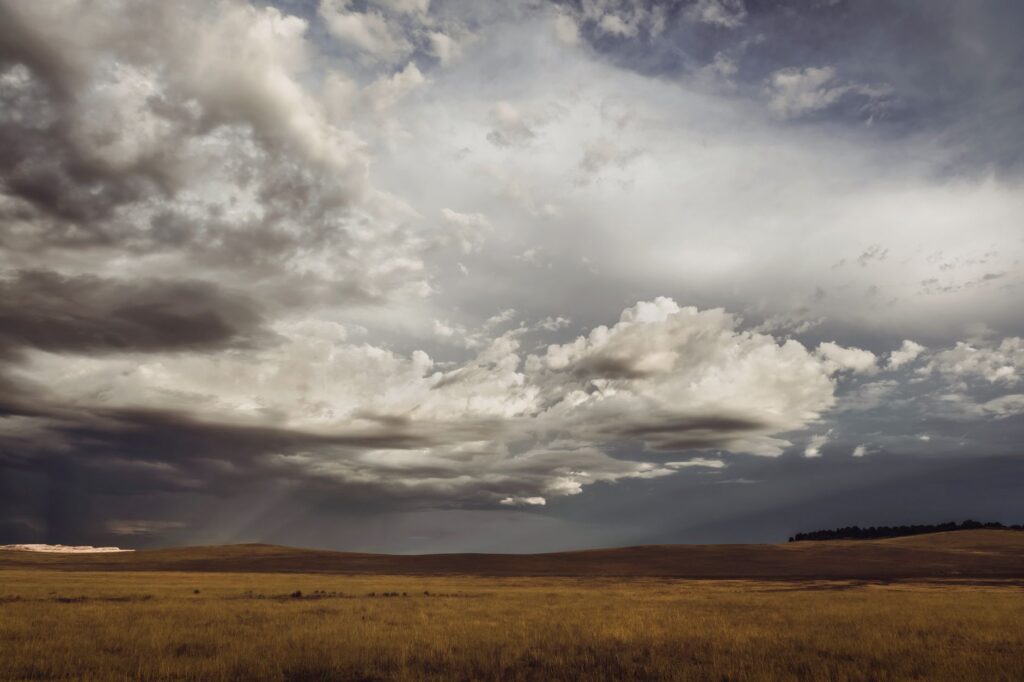
Tornadoes in the United States typically arrive in late spring and early summer, when warm and cold air masses collide, according to Wikipedia’s Tornado Alley article. Missouri follows that pattern: the EF5 tornado that hit Joplin, the deadliest in the state’s history, struck on May 22, 2011. A tornado watch means conditions favor tornadoes in an area, and a tornado warning means one is happening or indicated for a specific place.
When is tornado season in Missouri?
The sources for this page describe the national pattern, late spring into early summer, and do not give a month-by-month count for Missouri. The Joplin tornado came on May 22 and the larger outbreak sequence around it ran from May 21 to 26, 2011. For current outlooks, watches and warnings, the National Weather Service and its Storm Prediction Center are the places to look.
Is Missouri in Tornado Alley?
Most definitions include it. Tornado Alley is a loose, informal term with no boundaries set by the National Weather Service, and the area common to most definitions takes in Arkansas, Illinois, Indiana, Iowa, Kansas, Minnesota, Missouri, Montana, Nebraska, North Dakota, Ohio, Oklahoma, South Dakota, Texas, Wisconsin and eastern parts of Colorado, New Mexico and Wyoming. The phrase dates to 1952, when it became the title of a research project on severe weather.
By frequency, Missouri sits in the middle of the pack. The National Climatic Data Center counted the average number of EF0 to EF5 tornadoes per 10,000 square miles per year for 1991 to 2010. Missouri recorded 6.5. Florida led with 12.3, Kansas had 11.7, Illinois 9.7, Oklahoma 9, Arkansas 7.5 and Texas 5.9. For neighboring states, see the guides to Kansas tornado season and Illinois tornado season.
A 2018 study of 1979 to 2017 found tornado frequency and impacts shifting east toward the area nicknamed Dixie Alley, with relatively higher activity in eastern Arkansas, the Memphis area and northern Mississippi.
What happened in the Joplin tornado?
According to Wikipedia’s article on the Joplin tornado, it touched down in Newton County at 5:34 p.m. CDT on May 22, 2011, and dissipated at 6:12 p.m., after 38 minutes on the ground. Its path was 21.62 miles long and it reached a peak width of nearly 1 mile as it crossed the southern part of Joplin before moving into rural Jasper and Newton counties.
The article lists the damage this way:
- Nearly 8,000 buildings damaged and over 4,000 houses destroyed (the summary table gives 4,380 houses).
- One of Joplin’s two hospitals among the major facilities hit.
- Costs of $2.8 billion in 2011 dollars, the costliest single tornado in U.S. history, and the highest insurance payout in Missouri history.
- About 1,150 people injured.
The death toll is stated two ways. The summary says 158 people died, including eight indirect deaths, while the table lists 158 direct deaths plus 8 to 9 indirect, so the figures differ. Either way, it was the deadliest tornado of 2011 and the deadliest in Missouri. It was also the first F5 or EF5 tornado in the state since May 20, 1957, when one destroyed several suburbs of Kansas City.
What warnings were issued before the Joplin tornado?
The Storm Prediction Center issued a public severe weather outlook at 11:30 a.m. CDT on May 22 naming tornadoes, large hail and strong winds as threats. A tornado watch for southwestern Missouri followed at 1:30 p.m., four hours before the tornado, and ran until 9:00 p.m.
The tornado warning for the storm west of Joplin was first issued at 5:17 p.m., 17 minutes before touchdown and 19 minutes before the tornado entered the city. Sirens sounded in Joplin about twenty minutes before the tornado struck, but the article says many residents did not heed the warning or the sirens.
What is a tornado, and how does one form?
The Storm Prediction Center’s Tornado FAQ quotes the Glossary of Meteorology: a tornado is a violently rotating column of air in contact with the ground and a cumuliform cloud. It does not need a visible funnel. Dust or debris can mark the circulation, and the FAQ says a funnel may be missing when the air below the cloud is too dry or the pressure drop is too weak to form one.
The classic explanation of warm Gulf air meeting cold Canadian air and dry Rockies air is called a gross oversimplification by the Storm Prediction Center, because most thunderstorms that form under those conditions never produce a tornado. The agency says forecasters do not fully understand tornado formation. The most destructive and deadly tornadoes come from supercells, which are rotating thunderstorms with a well-defined radar circulation called a mesocyclone.
Quick answers
What was Missouri’s deadliest tornado?
The Joplin tornado of May 22, 2011, rated EF5 on the Enhanced Fujita scale.
Does the National Weather Service define Tornado Alley?
No. The agency has never officially designated a definition, so the boundaries change with the criteria used.
Where should I follow a tornado warning?
Local emergency officials and the National Weather Service issue and update warnings. Check their pages for the instructions that apply to your area.
Checked against official sources in November 2026. Alert criteria, records and guidance are revised: check the official agency page for current information.