2023 Turkey-Syria Earthquake: Two Shocks, Toll and Fault Map
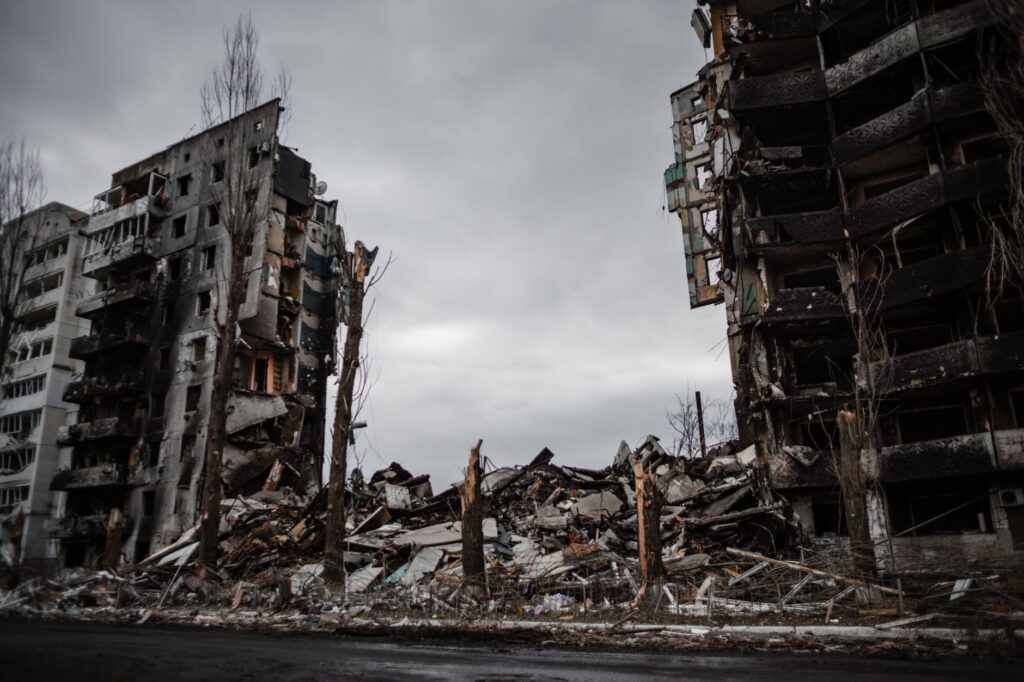
On Feb. 6, 2023, two earthquakes struck southern and central Turkey and northern and western Syria. The first, a moment magnitude (Mw) 7.8 shock, began at 04:17:35 local time in Turkey (01:17:35 UTC). The second, Mw 7.7, followed at 13:24:49 local time (10:24:49 UTC). According to Wikipedia’s article on the sequence, the death toll was between 59,488 and 62,013.
The quakes are the deadliest natural disaster in Turkey’s modern history. This guide covers when and where each shock happened, how the faults moved, what the toll and damage figures say and where the figures differ.
What happened on Feb. 6, 2023?
The first earthquake was centered 37 km (23 mi) west-northwest of Gaziantep. It was a strike-slip event, meaning the two sides of the fault slid past each other horizontally. Shaking lasted roughly 80 seconds. The Mercalli intensity scale reached XII (Extreme) near the epicenter and in Antakya.
The second earthquake was centered 95 km (59 mi) north-northeast of the first. Together the two shocks form what seismologists call a doublet, two large quakes of similar size in the same sequence. Shaking was felt as far away as Egypt and the Black Sea coast of Turkey, and a tsunami of 40 cm (0.40 m) was recorded.
After the main shocks, at least 30,000 aftershocks were counted by May 2023, and more than 540 of them were Mw 4.0 or greater.
Which faults ruptured?
The sequence came from shallow strike-slip faulting along segments of the Dead Sea Transform, the East Anatolian Fault and the Sürgü-Çardak Fault. Southern Turkey and northwestern Syria sit where the African plate, the Arabian plate and the Anatolian sub-plate meet.
The East Anatolian Fault is a strike-slip zone about 700 km long that forms the boundary between the Anatolian sub-plate and the northward-moving Arabian plate. Two of its segments broke in the first shock: the Erkenek segment produced 10 km of surface rupture in its northern part, and the Pazarcık segment also ruptured. The Sürgü-Çardak Fault, about 160 km long, runs north of the main fault. Before 2023 its only recorded earthquake was a M 6.8 event in 1544.
For a wider look at why this region shakes so often, see the guide to Turkey’s faults and earthquake records.
How many people died and how big was the damage?
The confirmed death toll in Turkey was 53,537. For Syria, estimates ranged from 5,951 to 8,476. The overall range of 59,488 to 62,013 deaths comes from the summary box on the same page, along with 140 missing and 121,704 injured. Because the Syrian numbers are estimates, totals differ between sources.
Damage was widespread across about 350,000 km2 (140,000 sq mi), an area about the size of Germany. An estimated 14 million people, or 16 percent of Turkey’s population, were affected. Development experts from the United Nations estimated that about 1.5 million people were left homeless.
Damage was estimated at US$150 billion in Turkey, equal to nine percent of its gross domestic product (GDP), and US$9 billion in Syria, equal to 18 percent of its GDP. The overall estimate in the summary box is above US$157.8 billion.
How does it compare with other earthquakes?
The Mw 7.8 shock is the largest to hit Turkey since the 1939 Erzincan earthquake of the same magnitude, and jointly the second largest in the country, after larger estimates for the 1668 North Anatolia earthquake. It is the deadliest earthquake in present-day Turkey since the 526 Antioch earthquake, and the deadliest in present-day Syria since the 1822 Aleppo earthquake.
Worldwide, it is the deadliest earthquake or natural disaster since the 2010 Haiti earthquake, and the fifth deadliest of the 21st century. The story of the earlier disaster is told in the 2010 Haiti earthquake article, and a broader comparison of tolls is in the deadliest earthquakes in history.
How did the rescue response work?
Damaged roads, winter storms and disrupted communications slowed the effort run by Turkey’s Disaster and Emergency Management Presidency. It included 60,000 search-and-rescue workers, 5,000 health workers and 30,000 volunteers. After Turkey asked for international help, more than 141,000 people from 94 countries joined the rescue.
Could it happen again?
Large earthquakes along the East Anatolian Fault are not new. The fault produced damaging events in 1789, 1795, 1866, 1872, 1874, 1875 and 1893 on various segments, and later ones in 1971 and 2020. The Palu and Pütürge segments in the east show a recurrence interval of about 150 years for M 6.8 to 7.0 earthquakes. In the west, the Pazarcık segment has recurrence intervals of 237 to 772 years for M 7.0 to 7.4 earthquakes. These are research estimates, not forecasts of a specific date.
Quick answers
How strong were the two earthquakes?
The first measured Mw 7.8 and the second Mw 7.7, on the moment magnitude scale.
How long did the first earthquake last?
The summary table lists a duration of about 80 seconds.
How many aftershocks followed?
At least 30,000 by May 2023, of which more than 540 reached Mw 4.0 or greater.
Checked against official sources in November 2026. Alert criteria, records and guidance are revised: check the official agency page for current information.