Black Ice: Why Dawn Is Riskiest, Where It Forms and How to Drive
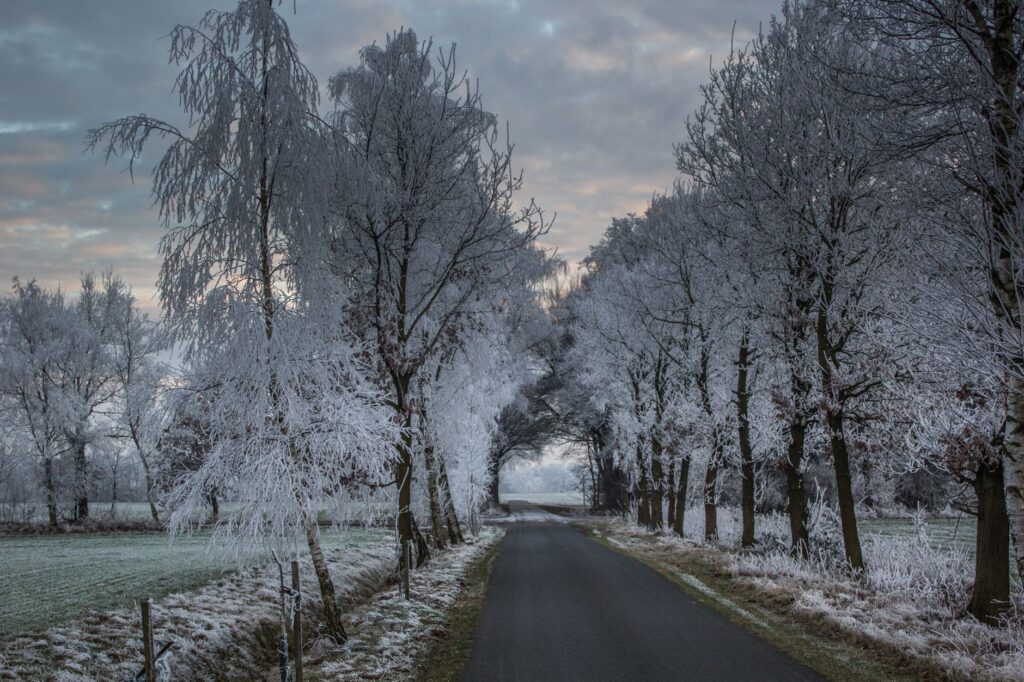
Black ice is a thin, transparent coat of ice on pavement that lets the dark road show through, so it looks like a wet or dry road instead of ice. The National Weather Service says it is most common in the early morning hours, after snowmelt or rain left on the road refreezes overnight as temperatures drop below freezing. It usually forms first on bridges and overpasses, and if your car starts to skid on it, the NWS tells drivers to stay calm, ease off the gas and steer toward where they want the front of the car to go.
What is black ice?
Black ice is a layer of glaze ice too thin to look white. The ice has no color of its own: the black asphalt underneath shows through it. According to the Wikipedia article on black ice, the National Weather Service defines it as patchy ice on roads or other transportation surfaces that cannot easily be seen. The American Meteorological Society describes it as a thin, dark-looking sheet that can form when light rain or drizzle falls on a road surface colder than 0 °C (32 °F).
It is hard to spot because there is usually little snow, sleet or ice pellets around it. Patches often sit between stretches of wet pavement, and the two look almost the same. Drivers, cyclists and people on foot can lose traction with no warning.
Why are roads most dangerous at dawn?
Ice forms overnight and the early morning is when most of it is waiting on the road. The NWS definition describes two common paths:
- Snow melts on the road during the day, then the water refreezes overnight when the temperature falls below freezing.
- Rain leaves the road slick, and the temperature drops below freezing during the night.
The early hours also carry the leftovers of the coldest part of the night, before the sun or traffic has warmed the surface. For the way a heavier coating of freezing rain builds up and closes roads, see our piece on why thin ice shuts roads and power.
Where does black ice form first?
Bridges and overpasses ice over before the rest of the road. Air moves both above and below an elevated deck, so when the air cools, the pavement on the bridge loses heat quickly and drops below freezing sooner than roadway that sits on the ground.
The I-35W Mississippi River bridge in Minneapolis is a well-documented example. Spray from nearby Saint Anthony Falls added moisture, and the bridge caused several pileups over its 40-year life. On Dec. 19, 1985, the temperature reached −34 °C (−29 °F), and a large pileup followed on the northbound side. In 1996 it was named the most treacherous cold-weather spot in the local freeway system. The Minnesota Department of Transportation tested magnesium chloride solutions starting in January 1999, and in October 1999 the state built temperature-activated nozzles into the deck to spray potassium acetate. That system began operating in 2000.
Black ice can also form in other places and conditions:
- On long downhill slopes, where drivers coming over a crest cannot see trouble ahead. On Dec. 1, 2013, ice that formed suddenly on a downward slope of westbound I-290 in Worcester, Massachusetts, set off a chain of crashes involving three tractor-trailers and over 60 other vehicles.
- In extreme cold below −18 °C (0 °F), when moisture from car and motorcycle exhaust condenses on the road and freezes. This caused multiple crashes in Minnesota during a long cold stretch in mid-December 2008.
- After a sudden warm-up following a long cold spell. The pavement can stay well below freezing even when the air is several degrees above it.
Why doesn’t road salt always stop it?
Salt works by lowering the freezing point of water, but it has limits. Ordinary salt (sodium chloride) is effective down to about −18 °C (0 °F). Below that, it does little, which is the same range where exhaust moisture can glaze the road. According to the Wikipedia article on road salt, road crews use calcium chloride or magnesium chloride in colder weather.
Crews also use two different approaches. Anti-icing means spreading salt or brine before snow or freezing rain arrives so ice cannot bond to the pavement. De-icing means applying salt after ice has already formed. Dry rock salt can be blown off the road by traffic, so a treated road is not a guarantee of grip.
How should you drive if you hit black ice?
The National Weather Service winter safety page gives these instructions for a skid:
- Stay calm.
- Ease your foot off the gas.
- Turn the wheels in the direction you want the front of the car to go.
- If your car has anti-lock brakes (ABS), press the brake pedal with steady pressure. Never pump the brakes on a car with ABS.
The NWS also tells drivers to slow down, because a road that looks only wet can still be slick. It notes that more than 5,000 deaths occur on the roads each year because of weather conditions.
How can you prepare before a winter drive?
The NWS lists these steps for anyone who has to drive in winter weather:
- Clear all ice and snow off the vehicle before leaving; snow flying off cars causes crashes.
- Tell someone where you are going and which route you will take.
- Carry a fully charged phone, a car charger and an emergency supplies kit.
- If weather makes it hard to see, pull to the side of the road and stop until visibility improves. Turn off your lights and set the parking brake so other drivers do not follow your taillights into you.
If your car gets stuck in a storm, the NWS says to stay in it, run the engine about 10 minutes each hour for heat, open a window slightly and keep the exhaust pipe clear of snow to avoid carbon monoxide poisoning.
How many crashes happen in winter weather?
The Federal Highway Administration reports five-year averages for 2019 to 2023, based on NHTSA data and analyzed by Athey Creek Consultants. Freezing precipitation (snow, sleet, hail, or freezing rain or drizzle) accounted for 18 percent of weather-related crashes, an estimated 219,942 crashes a year, with 34,206 people injured and 407 killed. Across all weather-related crashes, over 3,800 people are killed each year. The FHWA also found that average speeds on signalized city streets drop by 30 to 40 percent on snowy or slushy pavement.
Quick answers
Can black ice form when it is above freezing?
Yes. If the air warms suddenly after a long cold spell, the road surface can stay well below freezing even when the air is several degrees above 0 °C (32 °F).
Why do bridges freeze before the road?
Air flows above and below a bridge deck, so the pavement loses heat faster than road surface on solid ground.
Should I pump the brakes on ice?
Not if your car has ABS. The NWS says to apply steady pressure and never pump the brakes on an ABS-equipped vehicle.
Which winter alerts warn of icy roads?
Freezing rain and ice storm alerts from the NWS cover ice buildup on roads; our guide to the ice storm warning and how it differs from other alerts explains the categories. Follow your local emergency officials and the National Weather Service for current conditions.
Checked against official sources in November 2026. Alert criteria, records and guidance are revised: check the official agency page for current information.