Ice Storm Warning in Maine: What It Means and How It Differs
Live now: 20 active NWS winter alerts (7 Winter Storm Warnings, 2 Winter Storm Watches). See blizzard and winter storm warnings by state
An ice storm warning from the National Weather Service is usually issued when about 1/4 inch of ice or more is expected to build up, an amount that makes travel dangerous or impossible and is likely to snap power lines and bring down tree branches. A winter storm warning is broader: it covers a significant winter event with snow, ice, sleet or blowing snow, alone or in combination. Parts of Maine lay inside the freezing rain zone of the January 1998 ice storm, which left millions without power across the region it struck.
What is freezing rain and how does it form?
The National Weather Service (NWS) describes freezing rain as rain that freezes when it hits the ground, leaving a coating of ice on roads, walkways, trees and power lines. Sleet is a different product: rain that turns into ice pellets before it reaches the ground.
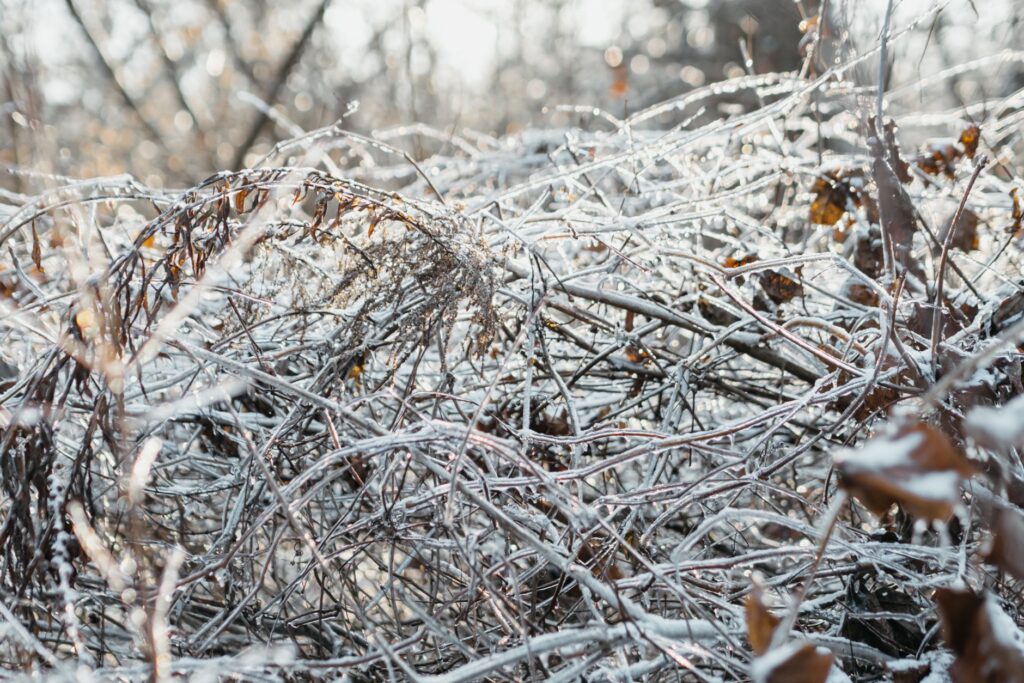
The setup, as laid out in Wikipedia’s freezing rain entry, starts with snow falling into a layer of warm air aloft, where it melts into rain. The rain then drops through a shallow layer of subfreezing air near the surface and cools to below 32 °F without turning to ice. These supercooled drops freeze the moment they touch the ground, a power line, a tree branch or a car, and the ice builds up into a smooth coating called glaze. If the subfreezing layer is deep enough, the drops have time to freeze in the air and arrive as sleet.
Freezing rain often comes with an approaching warm front, when cold air stays trapped near the ground while warmer air moves in above it. Radar cannot show freezing rain directly. According to the same page, observations from staffed or automatic surface stations are the only direct confirmation.
How is an ice storm warning different from a winter storm warning?
Both products come from your local NWS office, and each office applies its own local criteria. The agency gives an example: the amount of snow that triggers a winter storm warning in the Northern Plains is typically much higher than the amount needed in the Southeast. The NWS defines the main winter products this way:
- Ice storm warning: usually issued for ice accumulation of around 1/4 inch or more.
- Winter storm warning: issued for a significant winter event that includes snow, ice, sleet or blowing snow, or a combination of them.
- Winter storm watch: issued when conditions are favorable for a significant winter storm, with heavy sleet, heavy snow, an ice storm or a mix listed as examples.
- Winter weather advisory: issued when winter weather is expected but should fall short of warning criteria.
A winter storm warning can therefore cover freezing rain, while an ice storm warning singles out ice as the main threat. This site’s guide to winter weather alerts covers storm, blizzard, ice and cold products side by side, and the lake-effect snow guide explains the band-type snow warnings that the NWS also lists.
How much ice does it take to cause damage?
The NWS definition of an ice storm, as quoted in Wikipedia’s ice storm article, is a storm that leaves at least 0.25-inch (6.4 mm) of ice on exposed surfaces. According to most meteorologists cited there, that much ice can add about 500 pounds (230 kg) of weight per line span. Branches or whole trees can break, falling limbs block roads and pull down power and telephone lines, and the weight of the ice alone can snap lines and topple poles and steel-frame pylons.
Light, short-lived freezing rain forms thin ice that usually does only minor damage. On roads, wet ice gives almost no traction, and vehicles slide even on gentle slopes. Outages after a severe ice storm can last from several days to a month, and the damage can shut down entire metropolitan areas.
What happens when the power goes out?
Wikipedia reports that loss of electricity during ice storms can indirectly lead to hypothermia and deaths, and that water freezing inside pipes can rupture them. It also describes carbon monoxide poisoning as a frequent problem: people turn to alternative heating and cooking, and gas generators, charcoal and propane barbecues and kerosene heaters give off carbon monoxide when they run in confined spaces such as basements. Early symptoms include nausea, dizziness, fatigue and headache, while high levels can cause unconsciousness, heart failure and death.
What happened in the 1998 ice storm?
Between Jan. 4 and Jan. 10, 1998, five smaller ice storms in succession struck a narrow band from eastern Ontario through southern Quebec, New Brunswick and Nova Scotia, plus bordering areas from northern New York to central Maine, according to Wikipedia’s account of the storm. Steady freezing rain and drizzle fell for more than 80 hours over several thousand square miles, including parts of Vermont, New Hampshire and Maine.
Many power lines broke, and over 1,000 transmission towers collapsed in chain reactions. More than 4 million people lost electricity, most of them in southern Quebec, western New Brunswick and eastern Ontario, some for an entire month. Bridges and tunnels linking Montreal with the South Shore were closed over concerns about weight and falling ice. More than 16,000 Canadian Forces personnel were deployed, which the article describes as the largest Canadian military deployment since the Korean War.
A steep temperature drop followed the freezing rain. Combined with the outages, it led to numerous indirect deaths from carbon monoxide poisoning from generators and other sources as people tried to keep warm. The page gives the death toll in two ways: 34 fatalities in its introduction, and 28 in Canada and 16 in the United States in its summary box, with 12 more in floods. Areas farther south from the same system, including the Appalachian region from Tennessee northward, got heavy rain and severe flooding. The flash flood and flood warning comparison explains how those alerts differ.
What do officials say to do during an ice storm warning?
For an ice storm warning, the NWS says travel is strongly discouraged. For a winter storm warning, it tells people to delay travel plans until conditions improve. For a winter weather advisory, it says to be prepared for winter driving conditions and to use caution when driving.
The NWS issues these products and local emergency officials decide on matters such as road closures and shelters in your town. Check your county and state emergency management pages and your local NWS office for instructions that apply where you are.
Quick answers
Is an ice storm the same as sleet?
No. Sleet is rain that turns into ice pellets before reaching the ground, according to the NWS. Freezing rain stays liquid until it strikes a surface, then freezes into a coating of glaze.
Do ice storms only hit the Northeast?
Most ice storms in the United States occur in the northeastern region, according to Wikipedia, but damaging ones have reached farther south. A February 1994 storm produced heavy ice as far south as Mississippi and caused reported damage in nine states.
Can forecasters always warn ahead of an ice storm?
Meteorologists can predict when and where an ice storm will occur, but some storms still arrive with little or no warning, Wikipedia says.
Checked against official sources in November 2026. Alert criteria, records and guidance are revised: check the official agency page for current information.