Google DeepMind AI Gives Hurricane Forecasters an Extra Day
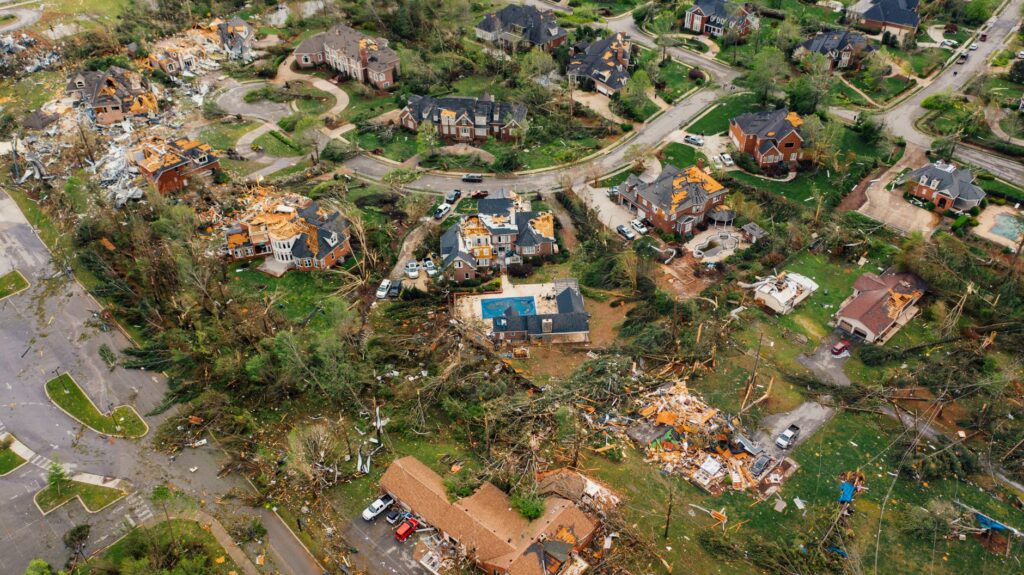
The U.S. National Hurricane Center (NHC) started using Google DeepMind’s AI model in 2025. According to AFP, a DeepMind paper in Nature in August concluded the model buys forecasters roughly one more day of accuracy. People still sign off on every forecast.
The center is also developing a successor with Google. Interest grew in 2026, a year when a strong El Nino pushed the Pacific to a record hurricane count and Hurricane Isaias hit the southeastern United States in October as a major storm.
How AI models differ from older tools
Earlier, the NHC forecast tropical cyclones with three families of models. Dynamical models run on supercomputers and solve the physics equations for air movement and heat. Statistical models rely on past patterns linking storm behavior to things like position and time of year. Hybrid models mix the two approaches.
AI models also learn from data, but from much larger sets and with room for more intricate patterns. Ferran Alet, the DeepMind researcher in charge of its cyclone work, told AFP there is no model built only for hurricanes: the everyday weather model is simply applied at its limits.
What the paper and Isaias showed
The Nature paper reports that the model’s three-day forecasts matched the quality older models reached only for two days ahead. With Isaias, it flagged a week before the storm formed that a tropical cyclone was possible.
For each cyclone it can produce 1,000 possible scenarios. Besides the track (the path) and intensity (the strength), it also predicts rainfall.
Dan Brown, who heads the NHC’s operations division, told AFP the AI models did quite well on track during Isaias and seem good at catching quick changes in complex steering patterns.
Where the NHC uses the models
Brown said AI models entered NHC operations in late June 2025, and in 2026 the DeepMind model joined some of the center’s consensus aids for track and intensity. The NHC also draws on AI models from the European Centre for Medium-Range Weather Forecasts and the National Weather Service, and has an agreement with Google to help develop its models.
He named DeepMind and the center’s own HCCA model among the top performers for track and intensity.
Why human forecasters still matter
Brown said single models can “wildly flip their tracks or intensity projections” between forecast cycles. Specialists rely on experience to judge which models suit a storm and how to combine them. He added that the AI models were trained on a baseline created by physics-based models.
An algorithm can give a track probability, he said, but it “doesn’t look at live aircraft and satellite data” to work out what the storm looks like right now. He called the specialist more important than ever.
What this means for hurricane forecasts
The accuracy gains coincide with a rapid U.S. data center build-out that is reshaping the power grid. A Cleanview analysis finds that new planned data centers will run mostly on natural gas, which raises the country’s carbon footprint.
AFP also notes that climate change is making hurricanes stronger, rainier and slower over land, which worsens damage.
Source: The Straits Times